
Guojing New Materials: Deeply Engaged in CVD Ceramics and Semiconductor Ceramic Components
Shandong Guojing New Materials Co., Ltd. will participate in Aibang’s 8th Precision Ceramics Industry Chain Exhibition from August 26 to 28, 2026 (Booth No. A10). We warmly welcome industry colleagues to visit us and exchange ideas!
01
Company Profile

Established in 2011 and affiliated with the Yuwang Investment Holding Group, Shandong Guojing New Materials Co., Ltd. is one of the early enterprises in China to engage in the R&D and production of CVD ceramic products. Guojing New Materials is a National High-Tech Enterprise specializing in the research and production of CVD precision ceramics, powder-sintered precision ceramics, semiconductor devices, and high-purity quartz for the semiconductor industry. The company's primary products include CVD ceramics (PBN, PG, SiC-CVD, TaC-CVD, etc.), powder-based ceramics (alumina, aluminum nitride, zirconia, boron nitride, etc.), coated products (PBN, PyC, TaC, and SiC coatings, etc.), and semiconductor devices (point sources, line sources, electrostatic chucks, ceramic heaters, quartz components, etc.).
The company operates a Shandong Provincial Engineering Technology Research Center and a China-Japan Joint Research Center for Novel Pyrolytic Technology. It has undertaken two projects under the Shandong Provincial Science and Technology Development Plan and three major provincial projects focused on independent innovation and the commercialization of research findings. The company has received the Shandong Provincial International Science and Technology Cooperation Award, recognition for a National Key New Product, and an award for an Outstanding New Product in Technological Innovation from Shandong Province; it has also been repeatedly listed in the province's pool of "Leading Enterprises in New Materials" and designated as a Shandong Provincial "Specialized, Refined, Distinctive, and Innovative" (SRDI) SME and a "Gazelle Enterprise." Additionally, the company holds over 120 authorized national patents.
02
Product Introduction
01
Pyrolytic Boron Nitride (PBN) Series Products
Pyrolytic Boron Nitride (PBN) is a type of specialty ceramic material. Its deposition process resembles falling snow: hexagonal boron nitride "snowflakes" settle in parallel layers onto a substrate material, building up to the desired thickness before cooling and being released from the mold.
Product Specifications:
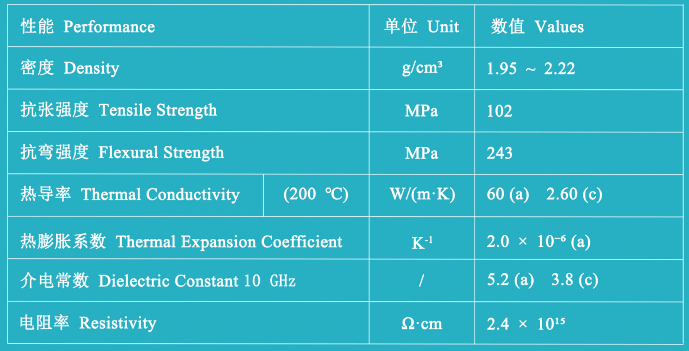
Key Features:
Purity up to 99.999% and density up to 2.2 g/cm³; features a dense surface, excellent gas-tightness, and superior high-temperature resistance; strength increases with rising temperature, peaking at 2200°C;
Resistant to corrosion by acids, alkalis, salts, and organic reagents; does not wet or react with the vast majority of metals and semiconductor materials at high temperatures;
High electrical resistivity and dielectric strength; low dielectric constant and dielectric loss tangent; excellent microwave and infrared transparency;
Excellent thermal shock resistance, high thermal conductivity, and low thermal expansion coefficient; exhibits significant anisotropy in mechanical, thermal, and electrical properties.
02
PBN Crucibles
VGF Crucibles
Specialized containers used for growing single crystals—such as GaAs, InP, GaP, and Ge—via the Vertical Gradient Freeze (VGF) method.
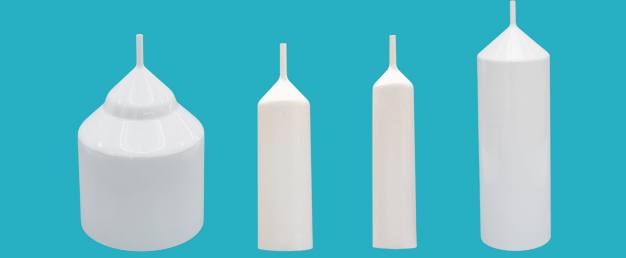
Key Features:
Capable of producing large-format crucibles (max. diameter: 8 inches; max. height: 18 inches);
High purity (99.999%);
Long service life (featuring an excellent interlaminar structure);
High crystallization yield (ensured by controlling anisotropy).
Evaporation Crucibles
Used in fields such as OLED display technology and thin-film solar cell growth; suitable for the melting and deposition processes of high-temperature, high-purity materials.
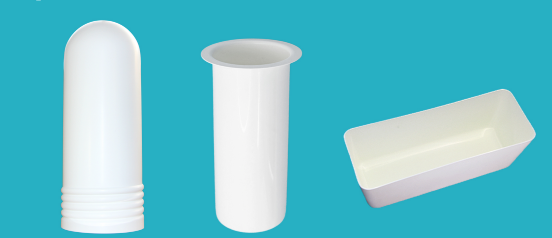
Key Features:
High purity (99.999%);
High density (2.12 g/cm³);
Extremely low outgassing rate at high temperatures;
Uniform thickness and excellent heating uniformity;
High thermal conductivity and excellent thermal shock resistance;
High interlaminar strength; easy to clean and reusable;
Excellent chemical inertness (does not react with acids, alkalis, salts, or organic solvents at high temperatures).
LEC and MBE Crucibles
Used as specialized growth vessels in semiconductor crystal and thin-film growth processes.
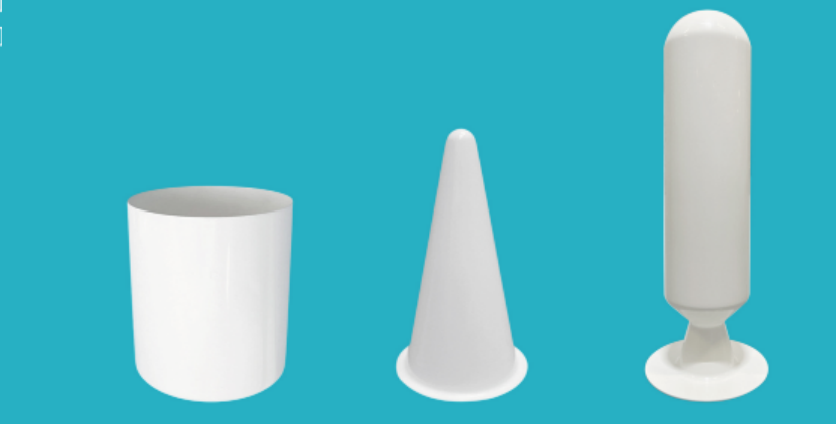
Key Features:
High purity (99.999%);
High density (up to 2.19 g/cm³);
Excellent high-temperature resistance;
Excellent chemical inertness; does not react with semiconductor materials at high temperatures;
Resistant to cracking; long service life.
03
PBN Plates/Sheets
PBN RF windows and support rods
Widely used in fields such as radar, electronic countermeasures, and satellite communications; suitable as high-performance dielectric support materials for microwave components (e.g., Traveling Wave Tubes/TWTs).
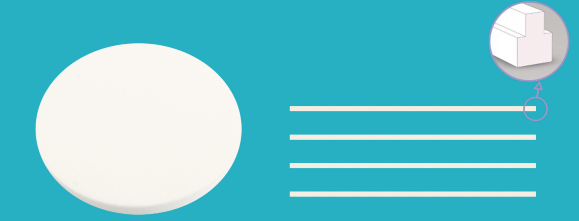
Key Features:
High density (2.20 g/cm³);
High precision (0.003 mm);
High strength (flexural strength ≥80 MPa, tensile strength ≥40 MPa);
Excellent airtightness (leak rate ≤1×10⁻¹⁰ Pa·m³/s);
Excellent thermal conductivity;
Low dielectric loss;
Low dielectric constant (5.2);
No outgassing.
PBN Insulating Rings and Sheets
Used in vacuum and high-temperature applications such as OLED, semiconductor, and solar energy sectors; suitable for components such as insulating sheets, insulating rings, and supports.
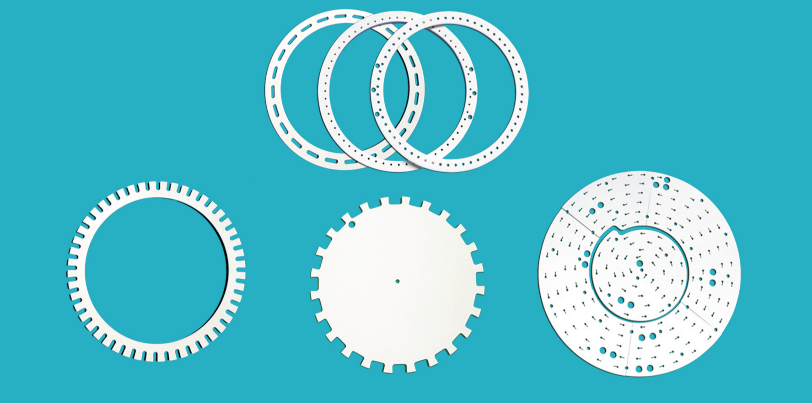
Key Features:
High purity (99.999%);
No outgassing at high temperatures;
High dielectric strength and high resistivity;
High flexural strength;
Easy to machine with high dimensional precision.
04
PBN Coatings
PBN-Coated Graphite Heaters
In high-temperature, high-vacuum environments, PBN is commonly used to coat and protect components such as graphite parts; it can also be used to manufacture coated heaters, thereby preventing graphite heating elements from releasing carbonaceous impurities at high temperatures.
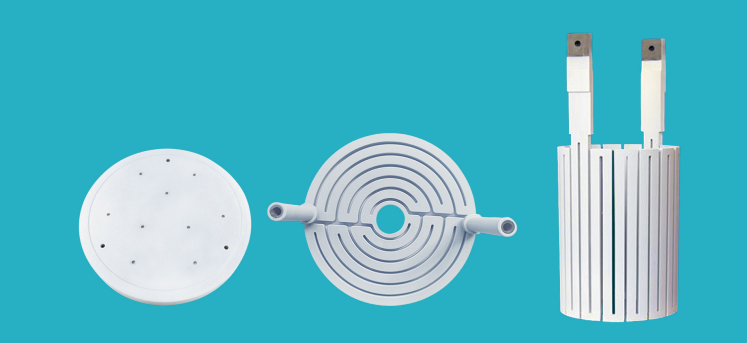
Key Features:
High purity (99.999%) and excellent gas tightness;
Excellent electrical insulation properties;
Extremely low outgassing rate at high temperatures;
Excellent chemical inertness; does not react with acids, alkalis, salts, or organic solvents at high temperatures;
Strong adhesion between the coating and the substrate; resistant to peeling.
PBN/PG Composite Heater
Heaters for use in equipment such as MBE, MOCVD, and PECVD systems.
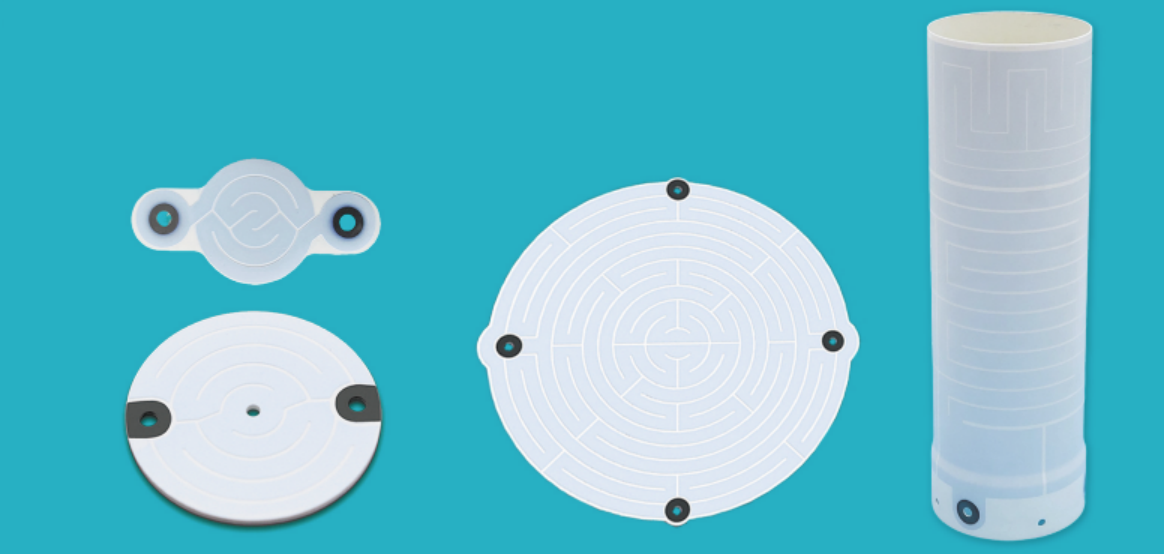
Key Features:
High purity (99.999%);
Excellent chemical stability of PBN and PG; resistant to acid and alkali corrosion;
Uniform heating;
Can be machined into complex geometries;
Capable of rapid heating up to 1700°C (in inert atmospheres or vacuum).
05
Pyrolytic Graphite Products
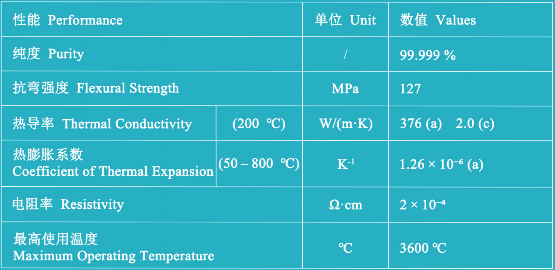
Pyrolytic graphite coating is a high-purity graphite film or dense layer deposited onto a substrate surface via chemical vapor deposition (CVD). It is often used in conjunction with pyrolytic boron nitride (PBN) coatings in high-temperature, vacuum, or semiconductor epitaxy equipment to provide conductive heating or thermal conduction functions.
Key Features:
High purity, dense surface, and zero porosity; no impurity outgassing at high temperatures; capable of maintaining a vacuum of 1.333 × 10⁻⁵ Pa at approximately 1800°C;
High-temperature resistance; strength increases with operating temperature, peaking at 2750°C, with sublimation occurring at 3600°C;
Excellent thermal shock resistance, low elastic modulus, high thermal conductivity, and low thermal expansion coefficient;
Excellent chemical stability; resistant to corrosion by acids, alkalis, salts, and organic reagents.
Product Specifications:
06
PyC-Coated Products
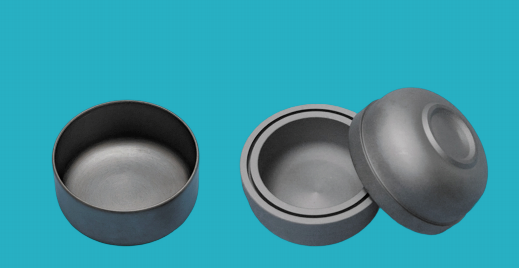
Organic EL crucibles, PyC-coated graphite crucibles
Specialized holding and heating vessels for the evaporation process in electron-beam evaporation equipment.
Key Features:
High purity (99.999%) and excellent gas tightness;
High-temperature resistance and excellent chemical stability;
Excellent thermal shock resistance and high thermal conductivity; does not react with molten metal at high temperatures;
Lightweight with a long service life.
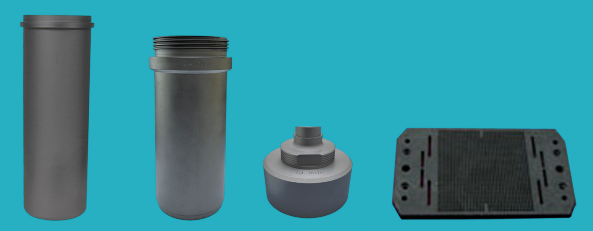
Custom PyC-Coated Components
Used in high-end industrial sectors such as aerospace, semiconductors, new energy, and metallurgy; capable of performing critical functions including high-temperature load-bearing, thermal insulation, and positioning.
Key Features:
High purity (99.999%) and excellent gas tightness;
High-temperature resistance and chemical stability;
Excellent thermal shock resistance and high thermal conductivity; inert to molten metals at high temperatures;
Lightweight with a long service life.
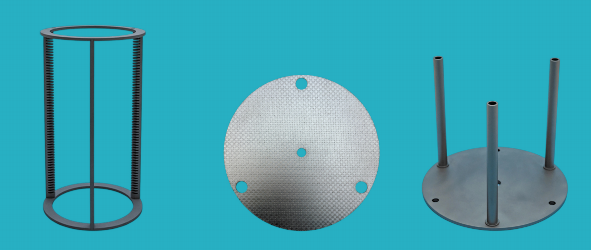
PyC-coated boats, C/C plates, and supports
Used in critical semiconductor processes such as high-temperature wafer annealing, ion implantation, and epitaxial growth; serves to hold wafers and ensure precise positioning.
Key Features:
High purity and a dense surface structure;
High-temperature resistance, with strength increasing as the operating temperature rises;
Excellent thermal shock resistance, low elastic modulus, high thermal conductivity, and a low coefficient of thermal expansion;
Excellent chemical stability, resistant to corrosion by acids, alkalis, salts, and organic reagents;
No particulate contamination; verified by ICP-MS analysis to meet stringent quality control standards.
07
Tantalum Carbide Products
Tantalum carbide coating is a high-performance ceramic coating produced via Chemical Vapor Deposition (CVD), renowned for its exceptional hardness, wear resistance, and corrosion resistance. With a hardness approaching that of diamond, it effectively withstands wear, scratching, and chemical attack, making it an ideal choice for applications in extreme environments.
Key components for PVT-method silicon carbide single-crystal growth, GaN wafer susceptors, flow guide rings, MOCVD susceptors, and tantalum carbide (TaC) heaters.
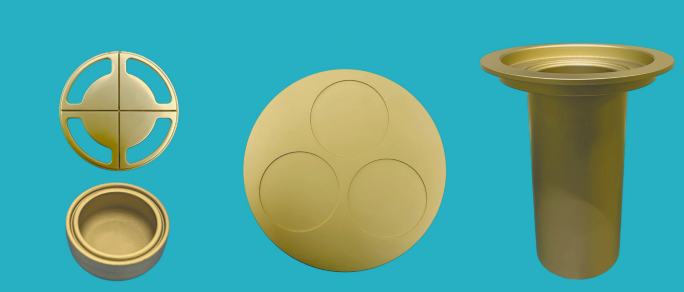
Product Features:
Temperature stability >2200°C;
Resistant to corrosion by H2, NH3, CH4, and SiH4;
Stable thermal resistance;
Strong bonding with graphite;
Fully encapsulated coating.
08
Silicon Carbide (SiC) Products
SiC Etch Rings, Focus Rings, and Edge Rings
Silicon Carbide Etch Rings (Focus Rings, Edge Rings): Used in dry etching processes for integrated circuit manufacturing.
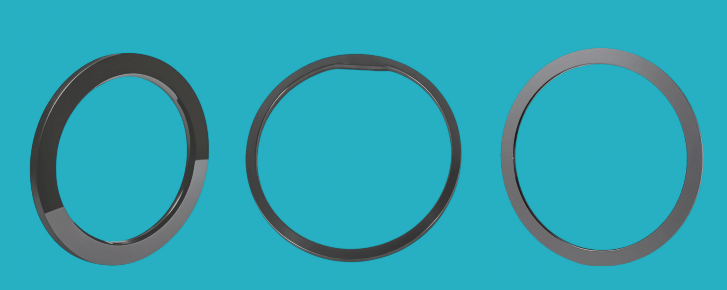
Key Features:
High hardness and wear resistance (resists wear from plasma etching and acts as a physical barrier at the boundary);
Good thermal conductivity (rapid heat dissipation during high-temperature etching to prevent thermal stress);
Low coefficient of thermal expansion (maintains dimensional stability at high temperatures, reducing thermal stress);
CVD-SiC purity of up to 99.9995%; no impurity outgassing during plasma etching, preventing wafer contamination.
SiC-Coated Epitaxial Susceptor
In semiconductor manufacturing processes, graphite and sintered SiC ceramic components that come into direct contact with wafers—or operate in the same zone under high-temperature conditions—require a high-purity SiC coating. This coating serves to isolate impurities within the base material, thereby preventing wafer contamination.
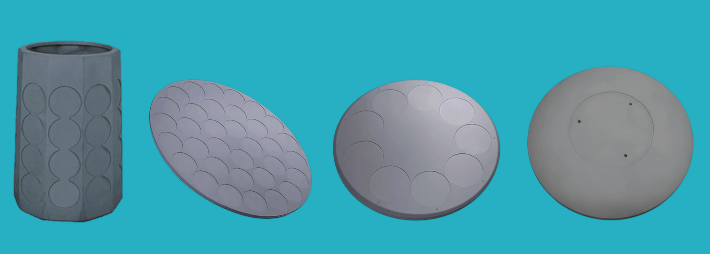
Key Features:
High thermodynamic stability;
Good thermal conductivity;
Uniform coating thickness and high surface flatness;
Corrosion resistance;
Coefficient of thermal expansion matched to graphite, with strong adhesion.
Silicon Carbide (SiC) Coating
As a common consumable in semiconductor manufacturing, SiC coatings are primarily used in processes such as oxidation/diffusion, etching, and ion implantation. The physical and chemical properties of the coating must meet rigorous standards for high-temperature and corrosion resistance; as these properties directly impact product yield and service life, the preparation of SiC coatings is critical.
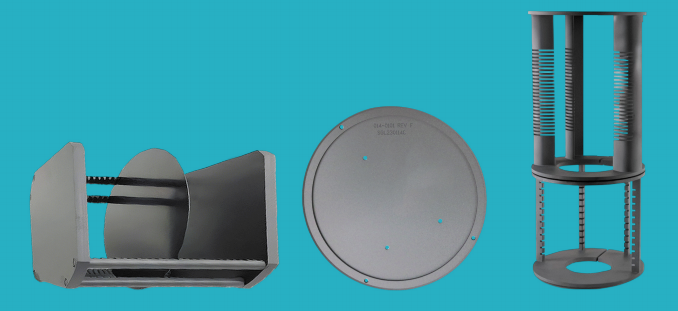
Key Features:
Oxidation resistance;
High-temperature resistance, low thermal expansion, high thermal conductivity, and thermal shock resistance;
High chemical inertness, corrosion resistance, and low impurity outgassing;
High strength, high hardness, and low particle generation;
Precision positioning, high cleanliness, and process compatibility;
Long service life and low maintenance.
09
Ceramic Materials
Hot-Pressed Boron Nitride (BN) Ceramics
Manufactured using advanced international vacuum hot-pressing sintering processes and backed by industry-leading technical support, these materials exhibit excellent mechanical, chemical, electrical, and thermal properties, making them suitable for a wide range of high-performance industrial applications.
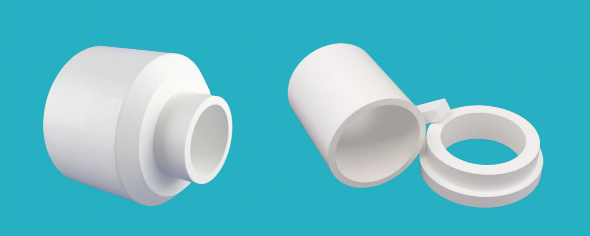
Key Features:
Excellent high-temperature resistance (operating temperature ≥2000°C in vacuum or inert atmospheres);
High thermal conductivity and low thermal expansion coefficient;
Excellent thermal shock resistance;
Excellent electrical insulation at high temperatures;
Good corrosion resistance against molten metals;
Easy to machine; customizable shapes and sizes available.
Alumina Ceramics (Al2O3)
With excellent electrical insulation properties and cost-effectiveness, alumina is one of the most widely used ceramic materials today. Suitable alumina grades can be selected based on the operating environment, and appropriate manufacturing processes can be employed to meet specific component shapes and dimensional requirements.
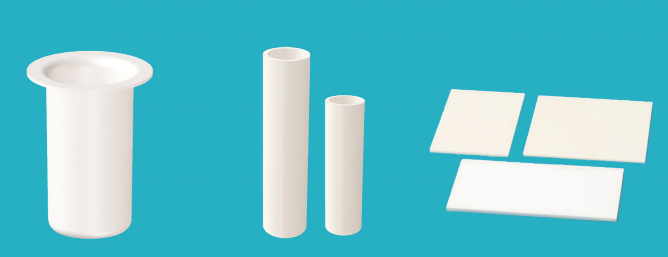
Key features:
High purity;
Excellent high-temperature insulation;
Resistance to plasma corrosion;
Excellent high-temperature resistance;
Good thermal shock resistance.
Aluminum Nitride (AlN) Ceramics
Thanks to properties such as excellent thermal conductivity, electrical insulation, and a coefficient of thermal expansion similar to that of silicon, AlN ceramics are widely used in various heat-dissipating components and parts for semiconductor manufacturing equipment.
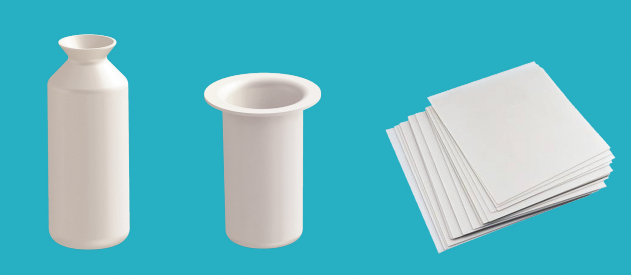
Key Features:
High purity, high-temperature resistance, and high mechanical strength;
High thermal conductivity and low thermal expansion coefficient;
High electrical insulation and low dielectric constant;
Excellent corrosion resistance against molten metals.
Zirconia Fibers (ZrO2)
Zirconia fiber products are lightweight refractory materials made from yttria-stabilized zirconia fibers. They exhibit no phase transformation and maintain dimensional stability at high temperatures. They can be fabricated into boards, custom-shaped components, and other forms with customizable densities. Capable of long-term use in extreme environments up to 2200°C, they also offer excellent corrosion resistance.
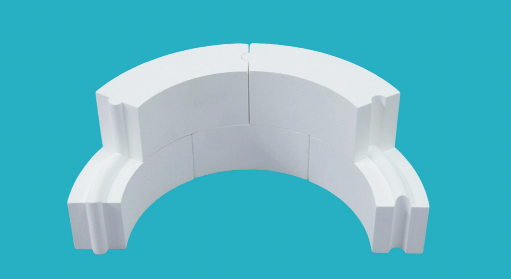
Key Features:
High-temperature resistance: maximum operating temperature of 2400°C, long-term operating temperature of 2200°C;
Extremely low thermal conductivity: 0.099 W/m·K (at 1400°C);
High purity, non-volatile;
Oxidation and corrosion resistance;
Customizable density and shape.