
Dedicated to Semiconductor Equipment: An Analysis of Nine Core Process Technologies for Aluminum Nitride Ceramic Heaters
Ceramic heaters are critical components in equipment such as semiconductor thin-film deposition systems. They enable uniform temperature distribution and even heating of silicon wafers, facilitating high-precision surface reactions on the substrate to form thin films. These heaters are subject to stringent standards regarding material purity, high-temperature resistance, and service life; their manufacturing presents significant challenges concerning thermal field uniformity, corrosion resistance, and long-term operational reliability. As the core processes determining product performance and yield, the technical sophistication and process control capabilities involved directly impact heating precision and final output quality in chip manufacturing.
Aibang Ceramic Technology Insights
01
Raw Material Doping and Granulation
Primary Application: Heater Body
(1) Raw aluminum nitride powder exhibits poor flowability, making direct forming difficult. Spray granulation transforms the powder into spherical granules characterized by good flowability and high bulk density. This ensures uniform mold filling during compression molding or cold isostatic pressing, minimizes voids and defects, and guarantees a uniform density distribution in the green body.
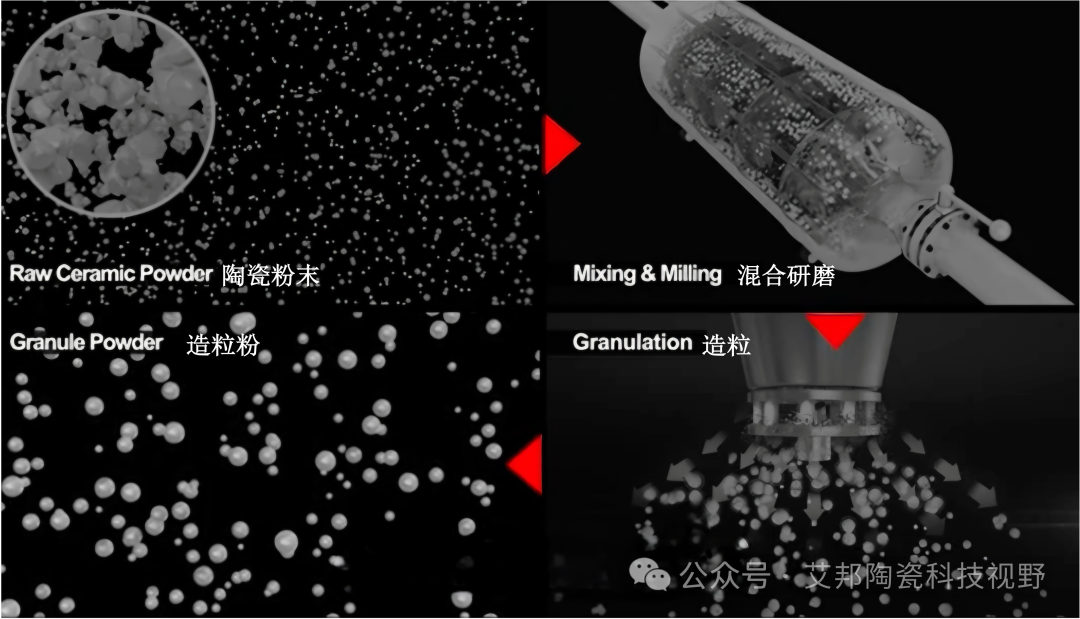
Image source: MiCo Ceramics
(2) Sintering aids and functional dopants can be introduced simultaneously during the granulation process. Achieving highly uniform dispersion of all components through slurry mixing avoids the compositional segregation often caused by dry mixing. Uniform doping effectively lowers the sintering temperature and promotes densification, while also allowing for the control of grain boundary phase composition and microstructure.
02
Hot-Pressing Technology for Multi-Layer Embedded Heating Plates
Primary application: Plate body
(1) The RF mesh is co-sintered with the ceramic matrix during the hot-pressing process; uniform pressure distribution ensures the mesh remains flat within the heating plate. Furthermore, the thermal expansion coefficients of the RF mesh and the ceramic matrix are well-matched, allowing interfacial bonding stresses to be released evenly during hot-pressing. This prevents interfacial cracking or delamination caused by thermal stress concentration, thereby ensuring the structural integrity of the heating plate.
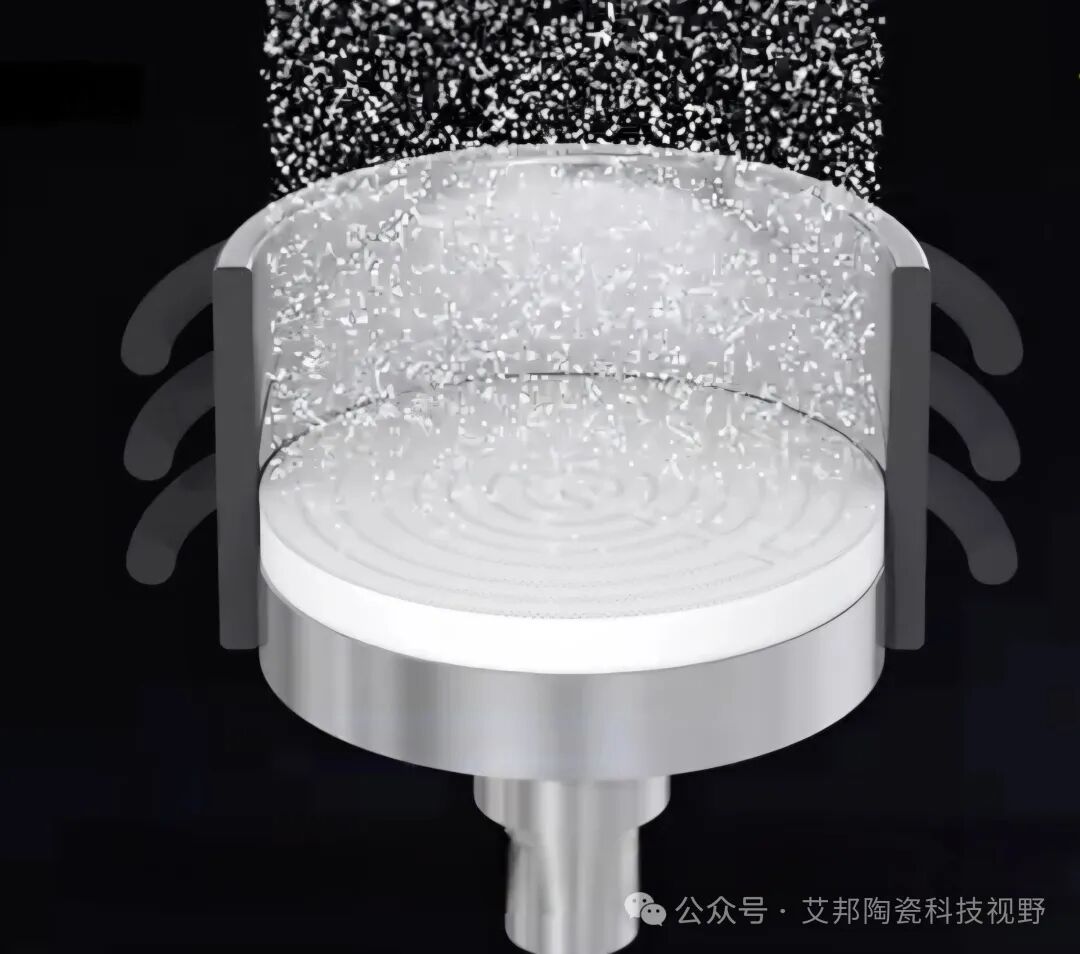
Image source: MiCo Ceramics
(2) After being positioned by a mold, the heating wire is co-sintered with the ceramic, becoming firmly embedded within the ceramic body; this prevents displacement caused by sintering shrinkage. The interface bond is tight and free of significant defects, preventing micro-cracks caused by thermal stress and ensuring long-term reliability.
03
Hot-Press Co-sintering Technology for Aluminum Nitride Ceramic-Metal Assemblies
RF (or electrostatic chucking) electrodes and heating electrodes are embedded within the aluminum nitride ceramic. The assembly is then hot-press co-sintered to form a monolithic structure in which the metal electrodes are completely encapsulated by dense ceramic, ensuring that no metal contamination occurs due to exposed electrodes during semiconductor manufacturing processes.
Primary Application: Heater Plate
(1) Hot-press sintering produces dense aluminum nitride ceramic with high thermal conductivity, ensuring rapid heating and uniform thermal distribution, thereby fully meeting the stringent temperature uniformity requirements of wafer processing.
(2) Hot-press sintering requires little to no sintering additives and is conducted in a vacuum or protective atmosphere, effectively preventing impurity contamination. Consequently, the aluminum nitride ceramic heater features high purity and excellent corrosion resistance, complying with strict semiconductor equipment cleanliness standards and ensuring stable long-term operation in vacuum environments.
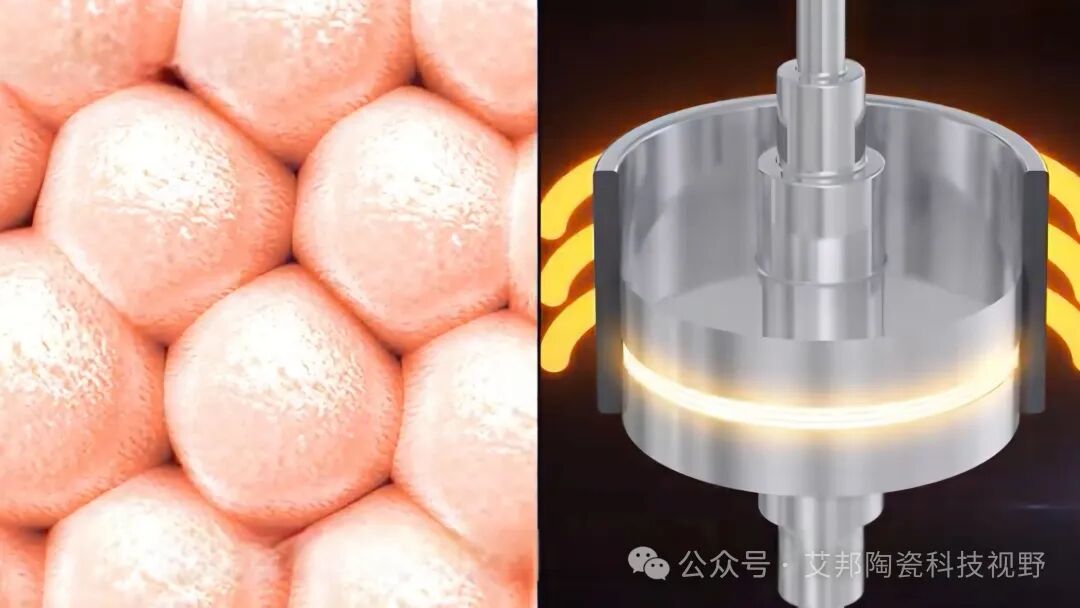
Image source: MiCo Ceramics
04
Cold Isostatic Pressing and Pressureless Sintering Technologies
Primary Application: Support Shafts
(1) Cold Isostatic Pressing (CIP) utilizes a liquid medium to apply uniform, omnidirectional pressure to the powder, ensuring consistent density distribution within the green body and effectively reducing the risk of deformation or cracking during sintering. Additionally, this process enables the forming of complex green body geometries—such as slender shafts, stepped profiles, and threaded sections—to meet the diverse design requirements of various heater models, thereby providing a high-quality, well-shaped foundation for subsequent sintering.
(2) Pressureless sintering achieves high-density sintered bodies with excellent mechanical strength, insulation properties, and corrosion resistance without the need for external pressure. This process eliminates the need for expensive molds and entails lower equipment investment and operating costs. It offers flexible production scheduling—making it suitable for multi-variety, small-batch manufacturing—and ensures consistent quality across batches.
05
Precision Ceramic Finishing Technology
Primary Applications: Broadly applicable
(1) Employs processes such as precision grinding, lapping, and polishing to achieve micron-level dimensional tolerance control, ensuring precise mating between the heater and components such as wafers and chambers.
(2) Utilizes precision surface grinding and chemical-mechanical polishing (CMP) to achieve sub-micron surface roughness (Ra ≤ 0.5 μm) and superior flatness, guaranteeing uniform wafer heating.
(3) Uses CNC grinding to achieve precise shaping of complex features, including thermocouple holes, mounting holes, alignment slots, steps, and threads.
06
Precision Gas-Tight Bonding Technology for Aluminum Nitride (Ceramic-to-Ceramic)
This process covers the gas-tight bonding of ceramic heater "disk-to-tube" joints and the embedding of internal ceramic gas channels. To preserve the properties of the aluminum nitride ceramic, various gas-tight bonding options tailored to different temperature ranges are provided, ensuring that the electrical resistance and thermal conductivity of the bonded product meet the requirements of semiconductor manufacturing processes. Gas-tightness performance: ≥ 10⁻⁹ Pa·m³/s.
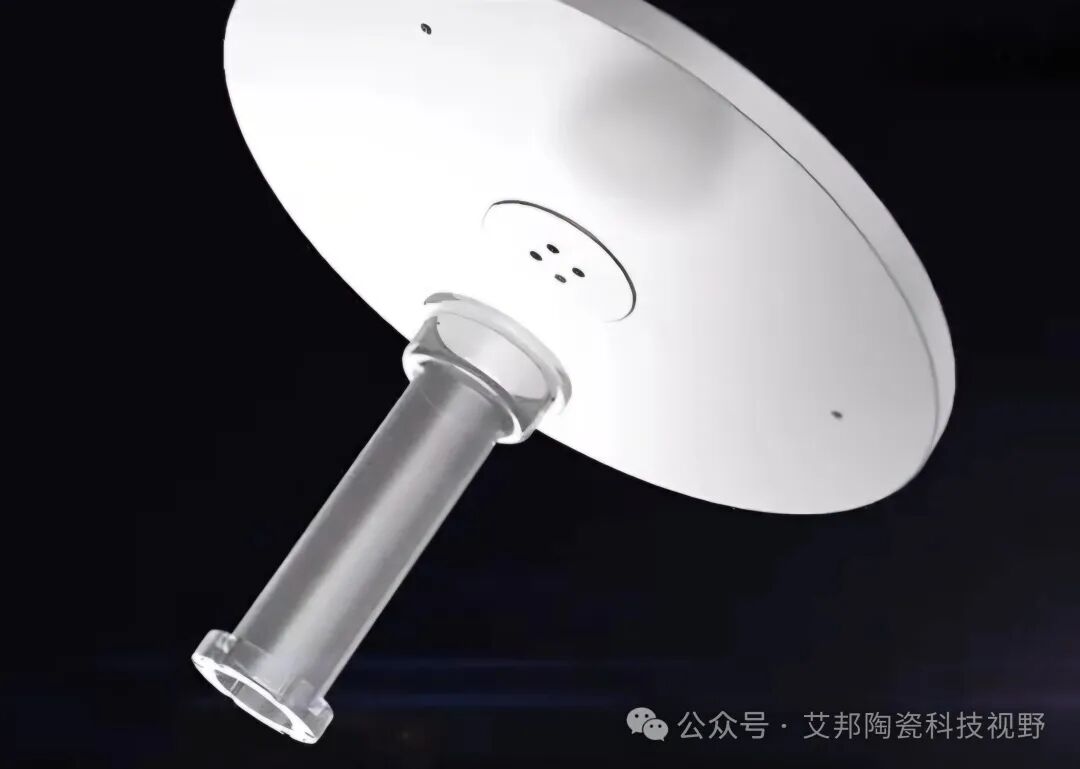
Image source: MiCo Ceramics
07
Processing and Sintering Technology for Thin-Walled Aluminum Nitride Ceramic Tubes with Through-Gas Channels
(1) To facilitate the installation of the ceramic heating plate, a ceramic tube is connected beneath it; this ensures the temperature at the sealed mounting interface remains below 250°C. Achieving effective thermal insulation requires the use of aluminum nitride ceramic—a material with low thermal conductivity—in a thin-walled configuration, which places high demands on the manufacturing process;
(2) To accommodate gas channel connections, through-gas channels must be incorporated into the thin-walled tube, imposing stringent requirements on the sintering process. This enables the creation of multiple through-gas passages within the thin-walled structure.
08
Precision Electrode Lead-Out and Welding Technology for Ceramic Heating Plates
This technology involves precisely routing out and connecting electrodes embedded within the ceramic heater. By selecting appropriate brazing materials and designing suitable brazing joints, the thermal expansion of the electrodes is matched to that of the ceramic. This enhances brazing reliability and ensures stable electrical performance, enabling reliable long-term operation at temperatures ranging from 500°C to 600°C.
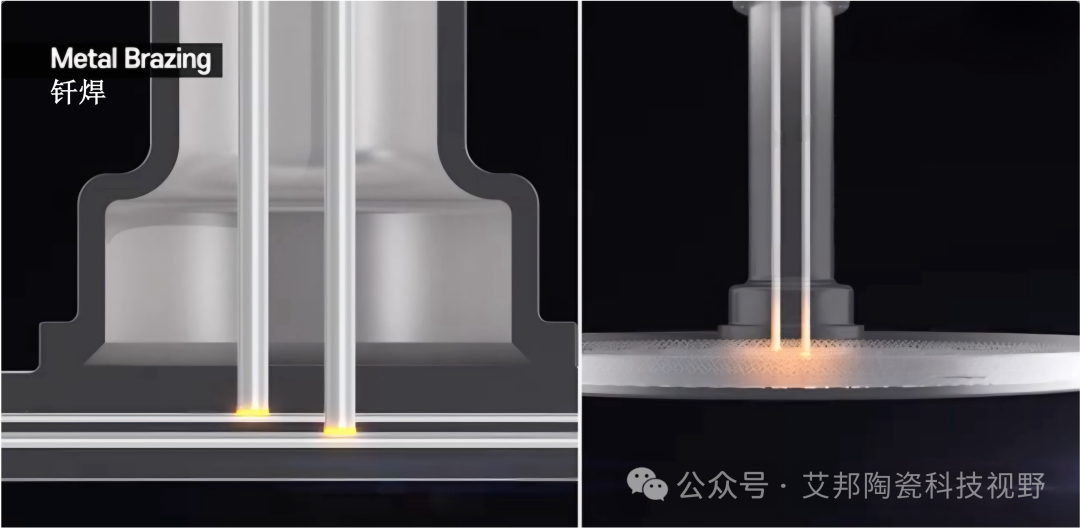
Image source: MiCo Ceramics
09
Precision Finishing Technology for Ceramic Surface Micro-bumps
High-precision masking and surface polishing enable precise control over the micron-scale dimensions and tolerances of micro-bumps. This ensures superior temperature uniformity for wafers placed on the heater during processing and guarantees a uniform distribution of electrostatic clamping force across the wafer in electrostatic chuck applications. Precision sandblasting allows for the creation of high-precision surfaces with a roughness of less than 0.1 μm across large-diameter ceramic heaters (exceeding 300 mm), enabling the simultaneous processing of hundreds to thousands of tiny bumps.
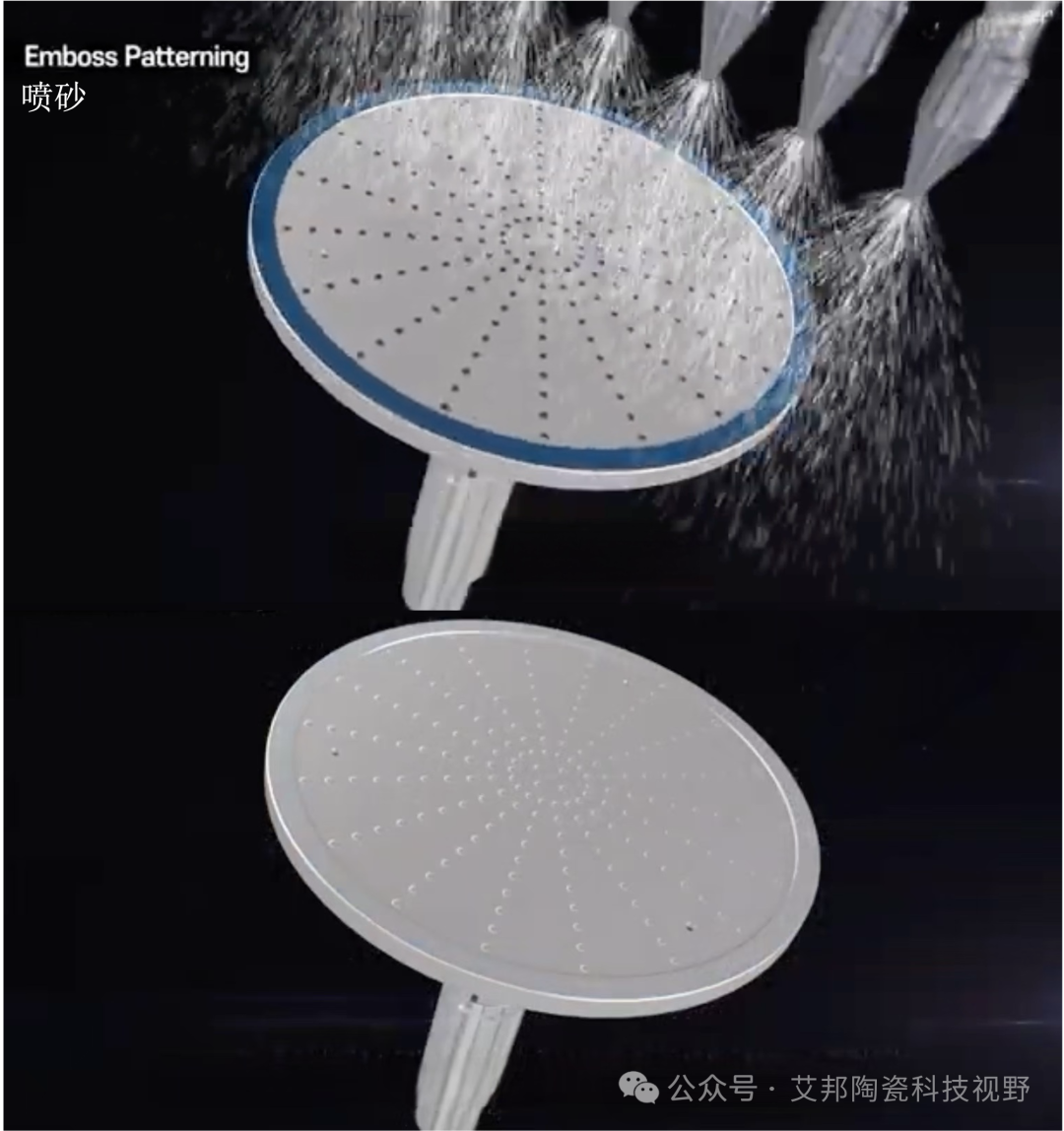
Image source: MiCo Ceramics
On August 26, Yu Dingxin, Senior Vice President of Guangdong Jingci (MiCo Ceramics), will attend the 2026 Semiconductor Ceramic Industry Forum and deliver a keynote presentation titled "R&D of Aluminum Nitride Ceramic Heaters and Their Application in CVD." You are cordially invited to attend and engage in discussions. Venue: Hall 7, Shenzhen World Exhibition & Convention Center.
Sources: Xianfeng Precision, Kema IPO Prospectus
Aibang has established a WeChat group for the semiconductor ceramic industry; please scan the QR code below to join:

Recommended Event: [Agenda Update] 2026 Semiconductor Ceramics Industry Forum (August 26 · Shenzhen)
2026 Semiconductor Ceramics Industry Forum
August 26, 2026
Hall 7, Shenzhen World Exhibition & Convention Center
Forum Zone 2 | August 26, 10:00–16:00 | ||
No. | Presentation Topic | Speaker |
1 | Ceramic Materials and Components in Semiconductor Equipment | Professor Pan Wei, Tsinghua University |
2 | Electrostatic Chucks and Key Material Technologies | Professor Ying Guobing, Southeast University |
3 | R&D of Aluminum Nitride Ceramic Heaters and Their Application in CVD | Yu Dingxin, Senior Vice President, Guangdong Jingci New Materials Co., Ltd. |
4 | Application of Silicon Carbide Ceramics in Semiconductor Manufacturing Processes | Wang Ziteng, R&D Director, Shandong Guojing New Materials Co., Ltd. |
5 | Research on Dense, High-Strength, High-Modulus, Ultra-Low-Expansion Cordierite Ceramics | Professor Rao Pinggen, School of Materials Science and Engineering, South China University of Technology (Ph.D. Supervisor) |
6 | Low-Temperature, Medium-Pressure Plasma Jet Technology Enabling Self-Propagating Synthesis and Application of Silicon Nitride Powder | Liu Hongliang, Chairman, Shandong Zhonglin Semiconductor New Materials Co., Ltd. |
7 | Additives for Advanced Ceramics | R&D Director, BYK Additives (Shanghai) Co., Ltd. |
8 | Development of a Full Production Line for Precision Manufacturing and AI-Based Inspection of Electrostatic Chucks | Wu Gangxiang, Soochow University (Senior Engineer; Mentor for Senior Technology Managers in Suzhou) |
9 | Building Integrated Manufacturing Capabilities for Advanced Ceramics: From Ceramic 3D Printing to Ultra-Precision Machining | Nie Pinxu, Business Development Manager (China), Sintogogear Advanced Ceramics |
10 | Topic TBD | Zibo Kehao Thermal Energy |
11 | Application of Photopolymerization-Based Additive Manufacturing in Semiconductor Ceramic Materials and Components | Huang Zhifeng, Researcher, Wuhan University of Technology |
12 | TBD | Zhengzhou Institute of Abrasives & Grinding (ZZSM) |
We welcome speaker recommendations or self-nominations. For speaking opportunities or to register as an attendee, please contact Ms. Li at 18124643204 (also her WeChat ID).
Registration Method 1: Add the WeChat contact and send your business card to register.
Phone: Ms. Li at 18823755657 (also her WeChat ID)
Email: lirongrong@aibang.com
Method 2: Copy the URL below into your browser and register via WeChat:
https://www.aibang360.com/m/100315?ref=459583
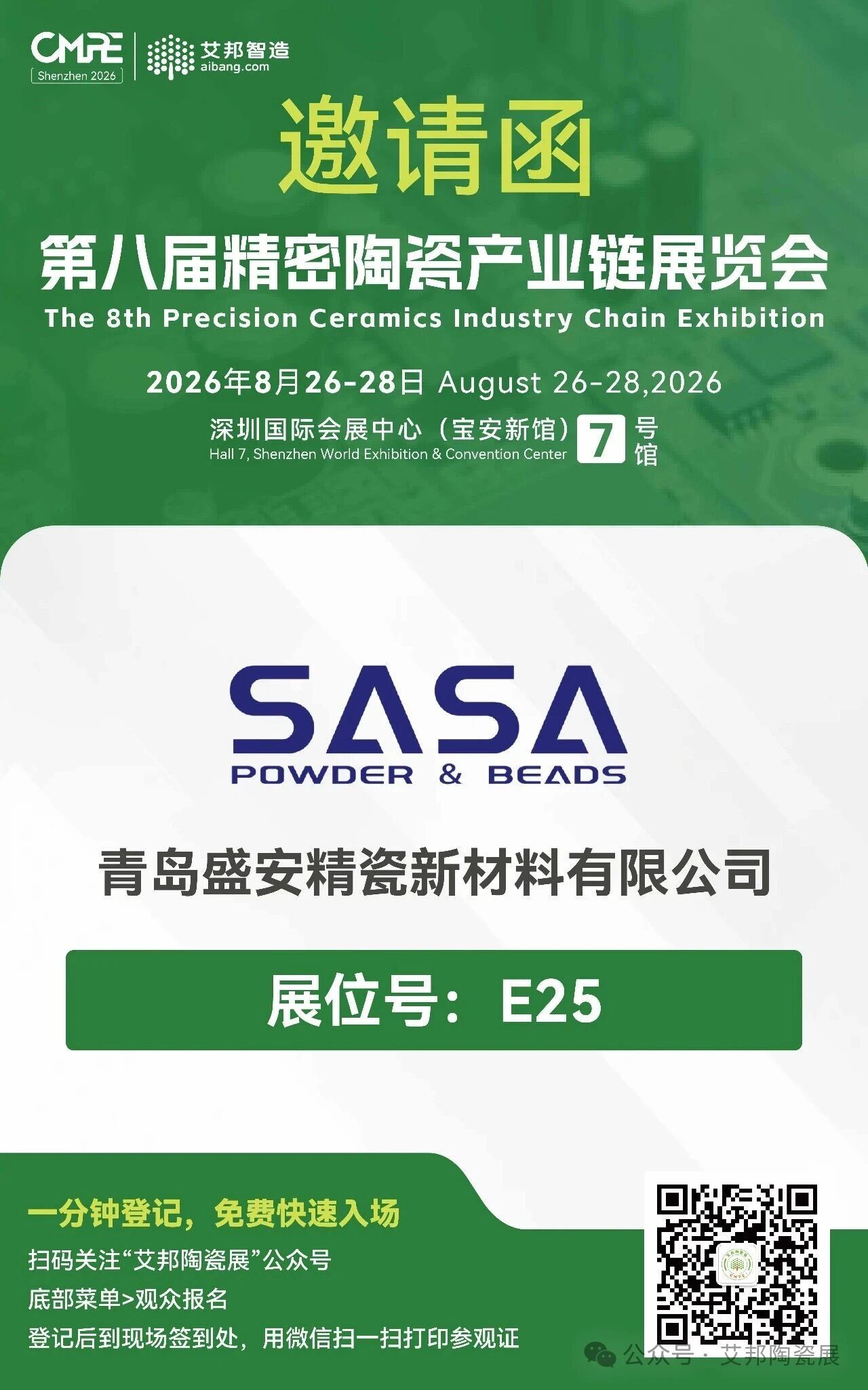
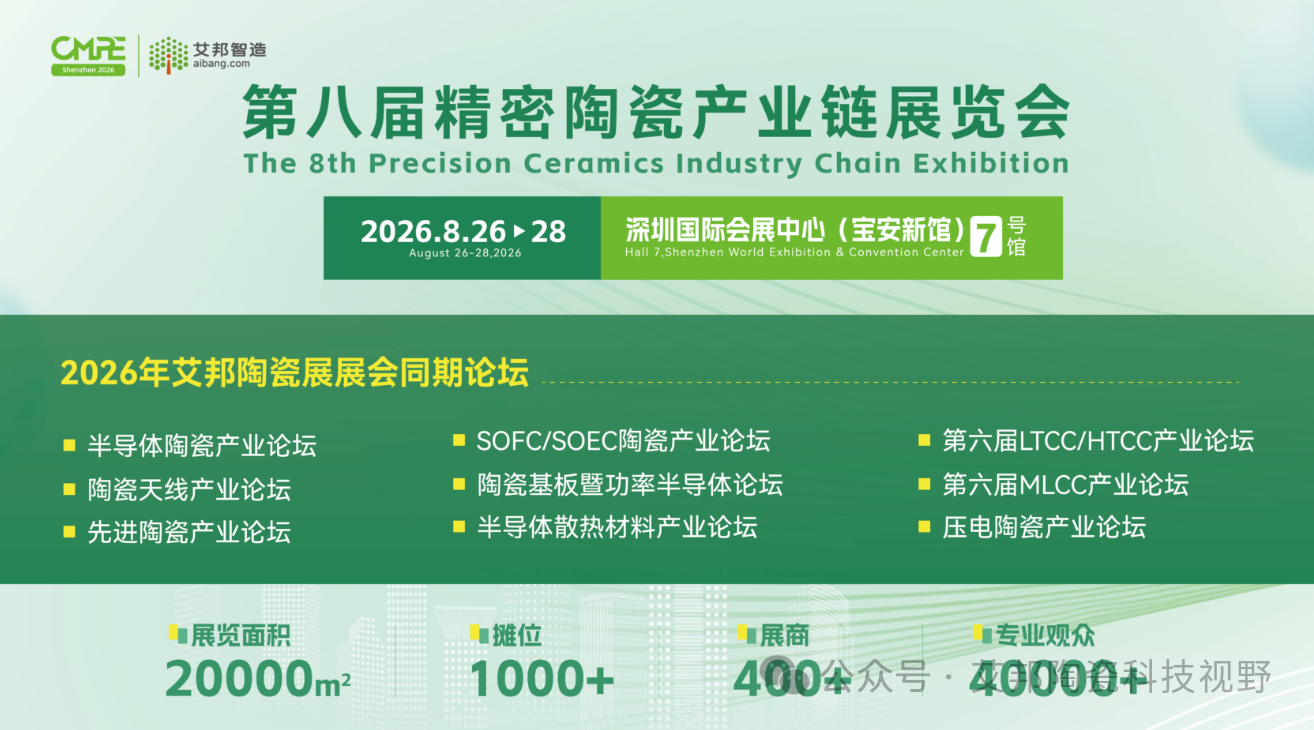
Concurrent Event: The 8th Precision Ceramics Industry Chain Exhibition (2026) will be held in Shenzhen from August 26 to 28!
Booth Booking
Ms. Li: 18124643204 (WeChat ID same as mobile number)
Ms. Wen: 18126443075 (WeChat ID same as mobile number)
Email: wenxiaoting@aibang.com