
As SiC power module driver substrates shift from DBC to silicon nitride AMB, how does silver-free brazing address the industry's cost challenges?
Driver Substrates for SiC Power Modules
Shifting from DBC to Silicon Nitride AMB
A Review of the Third-Generation Semiconductor Industry
How Does Silver-Free Brazing Address Industry Cost Pain Points?
Foreword
With the widespread adoption of 800V high-voltage vehicle platforms and the mass integration of SiC MOSFETs into automobiles, traditional alumina (Al₂O₃) and aluminum nitride (AlN) DBC substrates can no longer withstand the high-temperature, high-frequency, and high-power cycling conditions associated with SiC chips. Consequently, silicon nitride (Si₃N₄) AMB substrates have emerged as the only reliable solution for high-end power modules, driving a comprehensive industry shift toward AMB technology.
However, the industry has long been constrained by two major pain points: first, overseas companies monopolize silicon nitride AMB production capacity, resulting in extended lead times and significant price premiums; second, the high cost of precious metals in traditional silver-bearing Ti-Ag brazing materials limits the mass-market penetration of SiC modules. Silver-free brazing technology has emerged as the key to breaking this deadlock, directly slashing the precious metal costs of AMB substrates by nearly 30%.
Part I
SiC Drives Substrate Evolution
01
Extreme Operating Conditions for SiC Chips
The shift toward AMB (Active Metal Brazing) technology for power modules has become an industry consensus, with silicon nitride (Si₃N₄) vastly outperforming traditional DBC (Direct Bonded Copper). While silicon-based IGBTs have a maximum junction operating temperature of 125°C, SiC chips operate stably at 175°C. The resulting 2- to 3-fold increases in switching frequency and power density create two critical challenges:
Severe thermal shock: Frequent power cycling—caused by vehicle start-stop operations and charging/discharging—requires the substrate to withstand tens of thousands of thermal cycles ranging from -40°C to 150°C.
High current handling: Peak currents in inverters for 800V platforms exceed 600A, demanding exceptionally high bonding strength between the copper foil and the ceramic.
Traditional DBC substrates suffer from inherent limitations:
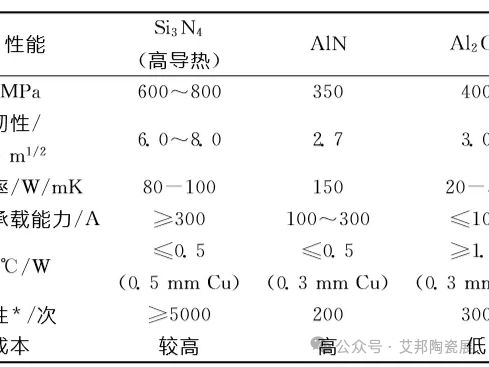
Alumina (Al₂O₃) DBC: Thermal conductivity is only 24 W/m·K, and thermal cycle life is merely 100 cycles, making it highly prone to cracking and delamination.
Aluminum Nitride (AlN) DBC: While thermal conductivity is adequate, the material is brittle—with a fracture toughness of only 3.4 MPa·m⁰⁵—making the substrate susceptible to breakage in the vibration-heavy environment of a vehicle.
DBC copper-ceramic bonding strength is only 17 N/cm, posing a high risk of copper foil delamination failure under high-current conditions.
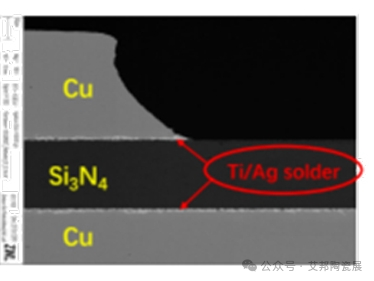
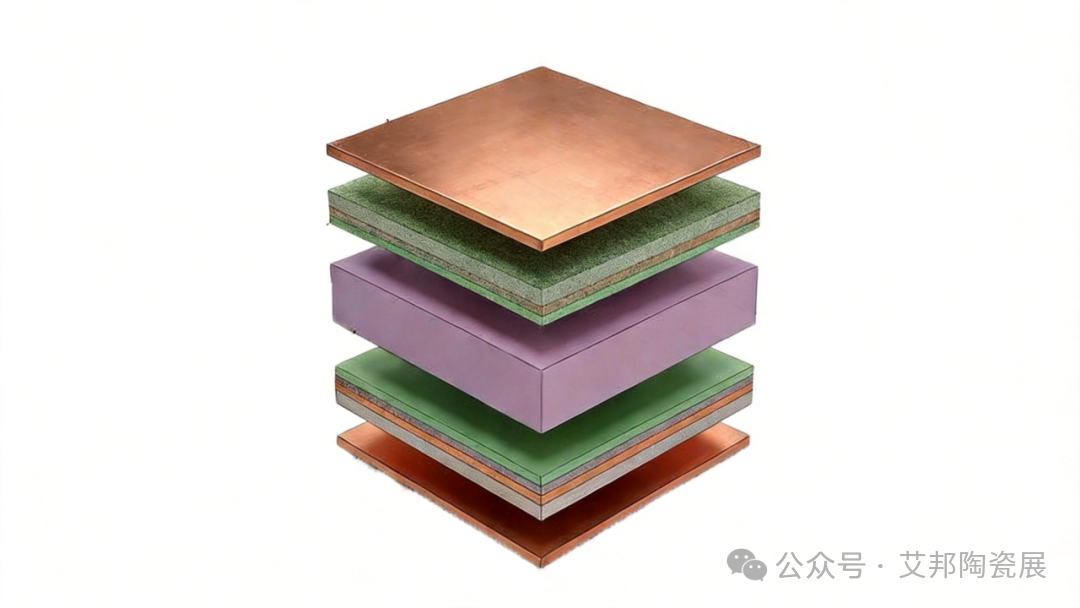
In contrast, the AMB process is perfectly suited to SiC requirements: utilizing vacuum active brazing, it achieves a copper foil peel strength of ≥30 N/cm and supports thick copper foils (500–800 μm) for ultra-high currents; when paired with silicon nitride ceramics, it effectively resolves mechanical and thermal performance limitations.
02
Silicon Nitride (Si₃N₄)
Silicon nitride is hailed as the "crown jewel" of advanced ceramics, boasting comprehensive performance that far surpasses AlN and Al₂O₃:
Ultra-high toughness: Fracture toughness of 6–8 MPa·m⁰⁵—more than double that of aluminum nitride—delivering excellent vibration and thermal shock resistance, with a thermal cycling lifespan exceeding 5,000 cycles;
Matched thermal expansion with SiC: A Coefficient of Thermal Expansion (CTE) of just 3.0 ppm/°C, nearly identical to that of silicon carbide chips, effectively eliminating cracking caused by thermal stress;
Balanced thermal conductivity: Mass-produced thermal conductivity of 80–100 W/m·K, balancing heat dissipation with structural strength to meet the demands of harsh automotive environments.
The industry's technical trajectory has fully converged:
For 400V low-voltage, entry-level silicon IGBTs, the market relies on the existing stock of alumina DBC substrates;
For 800V high-voltage SiC inverters, on-board chargers (OBCs), energy storage converters, and high-speed rail traction modules, silicon nitride AMB substrates are the standard specification (100% adoption).
Industry data indicates that the domestic penetration rate of silicon nitride AMB substrates in SiC modules stands at just 12% in 2025 but will rise rapidly to 28% in 2026 and surpass 45% in 2027; the market size is projected to triple over this three-year period, with a compound annual growth rate (CAGR) exceeding 32%.
Part 2
The Industry's Biggest Cost Burden
High Silver Prices
While traditional silver-bearing AMB brazing materials—specifically Ti-Ag alloys with silver content as high as 60%—have hindered module profitability, silver-free brazing technology is paving the way for mass adoption. These traditional materials present two major industry pain points:
High, rigid costs: The price of silver continues to rise, and brazing materials account for over 30% of the total AMB substrate cost; this directly drives up the end-market price of SiC modules, delaying large-scale adoption by vehicle manufacturers.
Reliability risks: Silver migration occurs in high-temperature, high-humidity environments, potentially leading to insulation failure during long-term use and raising the threshold for automotive-grade certification.
The high-end AMB market was previously monopolized by overseas companies like Heraeus and Rogers; proprietary formulations for silver-free brazing and vacuum brazing equipment created patent barriers, forcing domestic manufacturers to purchase silver-bearing solder at high prices and resulting in continuously squeezed profit margins.
Core Advantages of Silver-Free Brazing Technology
The novel silver-free active brazing system (utilizing Cu-Ti and composite micro-alloy systems) achieves three major breakthroughs:
Significant Cost Reduction: By completely eliminating silver—a precious metal—brazing material costs are directly reduced by 60%–70%, and the overall cost of a single silicon nitride AMB substrate drops by 25%–35%;
Performance Parity with Silver-Bearing Solutions: Ceramic wettability, copper-to-ceramic bond strength, and thermal cycling reliability meet the automotive-grade IATF 16949 standard, with no delamination or void formation observed after 10,000 thermal cycles;
Elimination of Silver Migration Defects: The silver-free formulation fundamentally resolves the issue of silver ion migration under high-voltage conditions, meeting the long-term operational requirements of 800V and higher-voltage platforms.
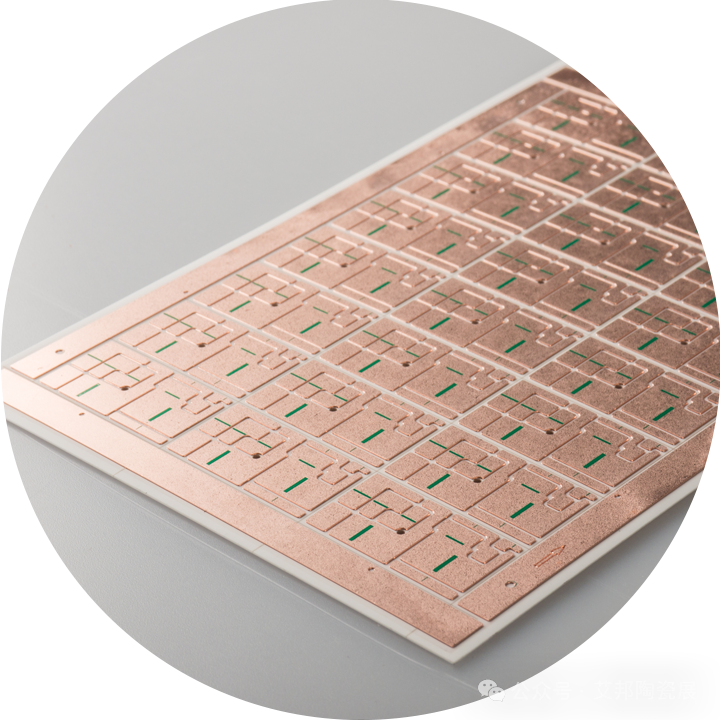
Leading power device manufacturers (StarPower, BYD Semiconductor, and BASiC Semiconductor) have initiated mass-production validation of silver-free AMB substrates, with a large-scale replacement cycle set to begin in the second half of 2026; silver-free brazing has emerged as a key catalyst for the volume ramp-up of silicon nitride AMB substrates.
Part 3
Window of Opportunity for Domestic Substitution Opens
Supply side: Overseas production capacity is constrained, leading to a severe shortage of domestic silicon nitride AMB substrates and opening a window of opportunity for domestic substitution.
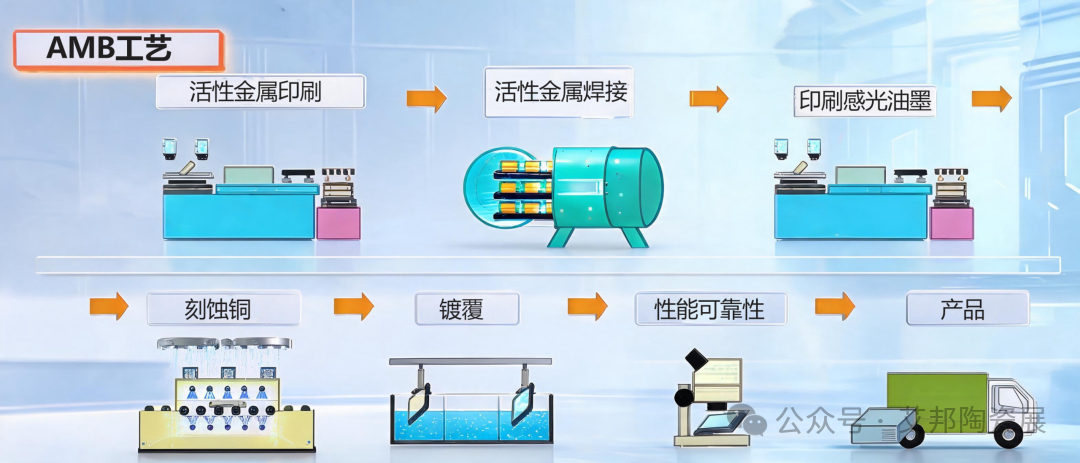
Global production capacity for high-end silicon nitride AMB substrates is concentrated among Rogers (USA), Heraeus (Germany), and NGK (Japan). With capacity expansion cycles spanning up to 18 months—and overseas capacity prioritized for European and American automakers—domestic power semiconductor manufacturers face three major challenges:
Lead times for spot orders have extended from 8 weeks to 22 weeks, with supply shortages exceeding 30%;
Imported silicon nitride powder and AMB substrates command a persistent price premium, driving procurement costs up by 40%;
Lengthy certification processes required by overseas suppliers heighten supply chain security risks for domestic companies.
Part 4
Core Logic of the Sector Over the Next Three Years
A summary of the core logic for the sector over the next three years reveals three clearly visible opportunities with high certainty:
01
Irreversible Substrate Technology Path
DBC substrates are gradually exiting the high-end power market, while Silicon Nitride (Si3N4) AMB has become the standard for 800V SiC systems. As the penetration rate of 800V high-voltage platforms rises and the volume of SiC chips in vehicles doubles annually, Silicon Nitride AMB faces no risk of technological displacement; the industry's technical trajectory is firmly established for the long term.
02
Silver-Free Brazing: The Key to Mass Adoption
The cost of precious metals is the primary bottleneck hindering the mass adoption of AMB substrates. Once silver-free brazing technology matures and is implemented at scale, the cost of SiC modules will decrease, accelerating market penetration in the new energy vehicle and energy storage sectors, which in turn will drive a surge in demand for Silicon Nitride AMB.
03
Accelerated Domestic Substitution
Leading players across the entire supply chain stand to reap the greatest benefits. Amidst overseas capacity shortages and extended delivery lead times, domestic power electronics manufacturers are proactively switching to domestic substrate suppliers; companies that merely provide metallization processing lack long-term competitiveness.
Value content is steadily rising, driving up the industry's baseline profitability. While the unit price of traditional alumina DBC substrates is merely in the tens of yuan, silicon nitride AMB substrates command prices three to five times higher; coupled with cost reductions from silver-free processes that boost gross margins, the profit potential across the industry supply chain continues to expand.
Conclusion
Competition in the third-generation semiconductor sector extends beyond the performance of SiC chips; the underlying ceramic substrates and packaging brazing materials are the critical factors determining the pace of industrial scaling. The convergence of three key drivers—the widespread adoption of AMB technology in power modules, the rapid market penetration of silicon nitride, and the implementation of cost-saving silver-free brazing—creates a high-certainty growth track for these new materials over the next three years.
Source: Huaqing Electronics
Original Article: A Review of the Third-Generation Semiconductor Industry: SiC Power Module Substrates Shift from DBC to Silicon Nitride AMB—How Does Silver-Free Brazing Address Industry Cost Pain Points?
Aibang has established a ceramic substrate industry networking group; you are welcome to join! We invite you to join our WeChat group for the ceramic substrate and packaging industry.
Recommended Event 1: [Concurrent Exhibition Forum] Ceramic Substrate and Power Semiconductor Industry Forum (August 26 · Shenzhen)
(Agenda updated as of July 3)
No. | Proposed Topic | Invited Speaker |
1 | Innovative Embedded Packaging Technology Based on DAB Ceramic Substrates | Liu Heng, Head of Strategic Planning Department, Jiangsu Ferrotec Power Semiconductor Research Institute Co., Ltd. |
2 | Silver-Free Active Metal Brazing (AMB) Copper-Clad Ceramic Substrates for High-Voltage Power Modules: Material Innovation and Reliability Study | Chen Tianhua, Deputy General Manager, Jiangsu Hansirui Semiconductor Technology Co., Ltd. |
3 | Application of Laser Precision Machining and Welding Processes in High-Reliability Power Device Packaging | Zhao Jiantao, General Manager, Zhejiang Zichen Laser Intelligent Equipment Co., Ltd. |
4 | Silicon Nitride Powder Project via Ammonolysis Method | Liu Zaixiang, General Manager, Qingdao Qiaohai Ceramic New Materials Technology Co., Ltd. |
5 | Key Technologies and Innovative Applications of DPC Ceramic Substrates for Advanced Packaging | Wu Zhaohui, General Manager, Jiangxi Jinghong New Material Technology Co., Ltd. |
6 | Leading the Comprehensive Innovative Application of High-Reliability Silicon Nitride Copper-Clad Substrates in New Energy Vehicles, PV Energy Storage, and Industrial Power Modules | Zhou Xin, General Manager, Nantong Wisper Semiconductor Technology Co., Ltd. |
7 | Positioning for Domestic Substitution: Mass Production Value and Application Prospects of 92% Alumina Ceramic Substrates | Pan Zimei, Engineer, Guangdong Ciyuanchuangxin Semiconductor Co., Ltd. |
8 | Application of PVD Technology on Ceramic Substrates for Packaging | Xie Bin, Professor, University of Science and Technology of China (USTC) |
9 | Research Progress on the Structure of IGBT Devices | Zhang Jinping, Professor, University of Electronic Science and Technology of China (UESTC) |
10 | Application and Development of High-Performance Aluminum Nitride Ceramics | Wang Mingqing, Deputy Chief Engineer, Chengdu Xuci / Ningxia Beici |
11 | Application of Magnetron Sputtering Deep-Hole Coating on Ceramic Substrates | Guangdong Huicheng Vacuum Technology Co., Ltd. |
12 | Industrialization Progress and Applications of High-Thermal-Conductivity Ceramic Substrates | Peng Xiang, Deputy General Manager/Chief Engineer, Yibin Hongxing Electronics Co., Ltd. |
13 | Topic To Be Confirmed | Hunan Jinbo Carbon Co., Ltd. |
14 | Discussion on the Application of Silver-Coated Copper in Silver Paste for Chip Interconnection | Professor Li Minggang, Central South University |
We are currently soliciting additional topics; recommendations or self-proposed topics are welcome. For speaking or sponsorship inquiries, please contact Ms. Li at 18124643204 (also her WeChat ID).
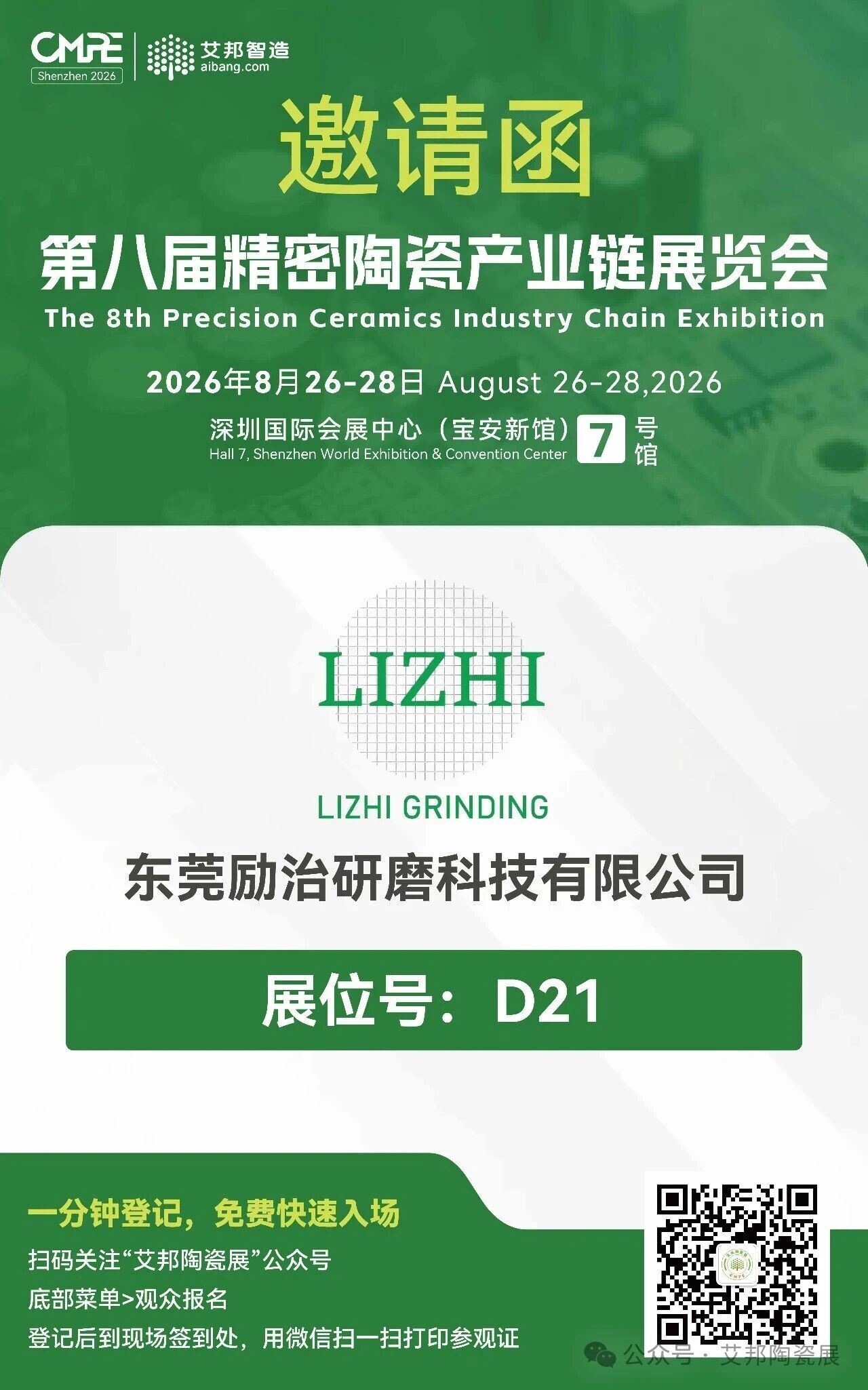
Recommended Event 2: Aibang’s 8th Precision Ceramics Industry Chain Exhibition [August 26–28, 2026 | Hall 7, Shenzhen World Exhibition & Convention Center (Bao'an New Venue)]
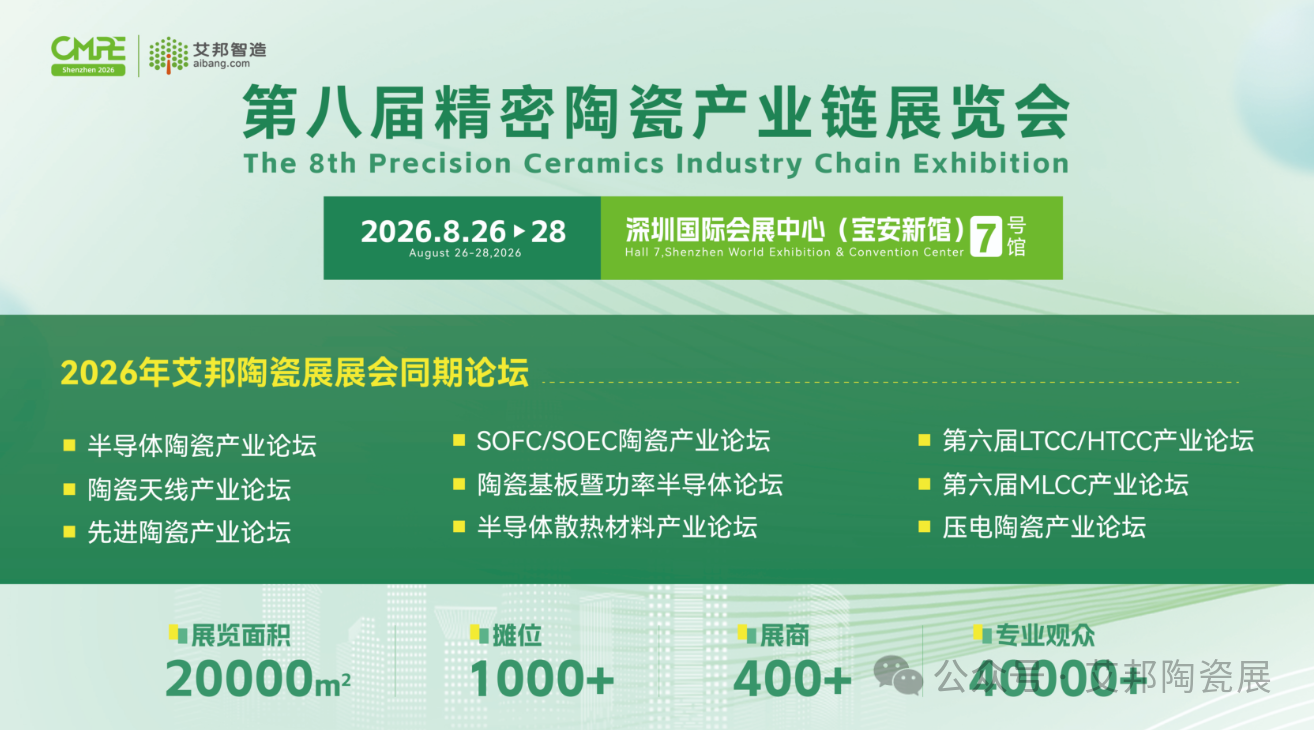
Booth Booking:
Ms. Long: 18318676293 (also WeChat)
Email: ab036@aibang.com