
Bismuth Telluride: The Core Material for Semiconductor Thermoelectric Cooling (TEC) Modules
01 Introduction to TECs
A Thermoelectric Cooler (TEC) is a solid-state heat pump based on the Peltier effect; it transfers heat from one side to the other under the influence of an external electric field, thereby achieving efficient cooling. TECs are primarily used in applications such as small portable refrigerators, cooling devices, and external heat sinks for consumer electronics, as well as in medical instruments, lasers, and optical communication modules. In recent years, the rapid advancement of optical communication technology has imposed stricter requirements for rapid heat dissipation regarding the high-power lasers found in optical modules. Thanks to their miniaturized form factor and precise temperature control capabilities, Micro TECs have become critical components for ensuring signal stability.
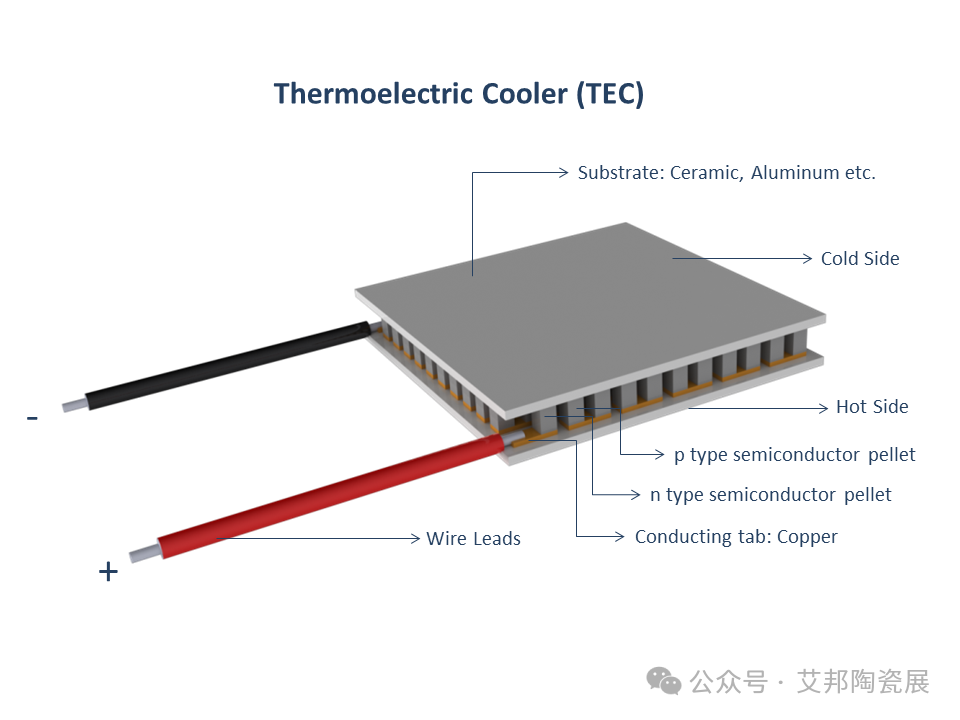
Image courtesy of Xiandao Thermoelectric
Thermoelectric coolers (TECs) typically consist of an array of p-type and n-type semiconductor materials, metal thermal conductors, ceramic insulating substrates, electrical interconnects, and sealing materials. Among these components, the thermoelectric materials are crucial, serving as the core element that enables the TEC's thermal transfer capabilities.
02 Common TEC Thermoelectric Materials
Common thermoelectric materials used in TECs include bismuth telluride (Bi₂Te₃)-based alloys, lead telluride (PbTe)-based alloys, and silicon-germanium (SiGe)-based alloys. Bismuth telluride (Bi₂Te₃) is the most widely used material, typically employed in applications operating at or near room temperature; p-type Bi₂Te₃ is doped with antimony (Sb) and selenium (Se), while n-type Bi₂Te₃ is doped with selenium (Se) and iodine (I). Lead telluride (PbTe) is suitable for the medium-temperature range and is frequently used in aerospace radioisotope batteries, though it sees limited use in cooling applications. Silicon-germanium (SiGe)-based alloys are suitable for high-temperature ranges, such as in deep-space exploration.
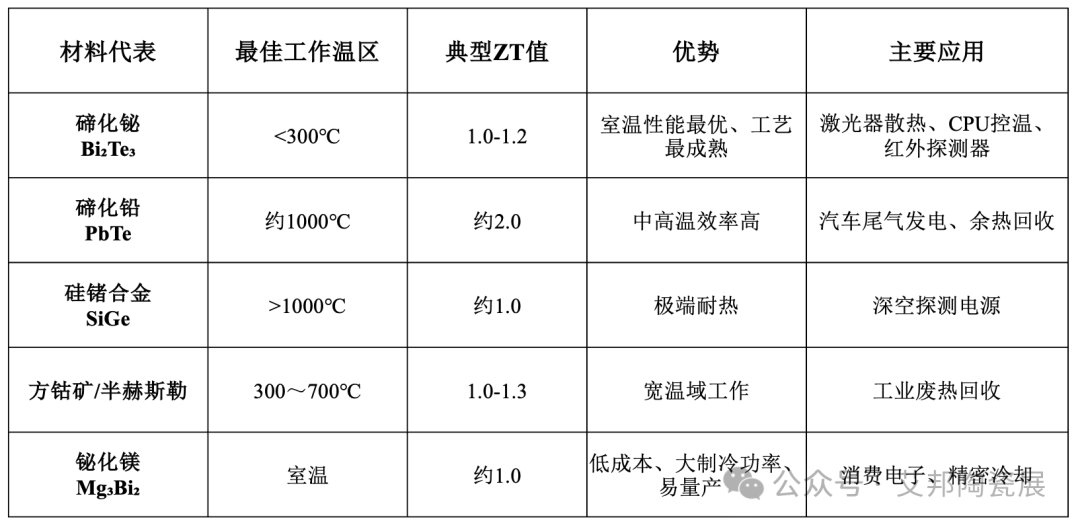
Common thermoelectric materials for semiconductors; data courtesy of Xiandao Thermoelectric.
03 Bismuth Telluride: An Irreplaceable Commercial Thermoelectric Material for TECs
Bismuth telluride (Bi₂Te₃) is the most widely used thermoelectric material in TECs. It is a compound composed of bismuth and tellurium that features a layered structure, excellent thermal conductivity, outstanding thermoelectric conversion efficiency, and unique topological insulator properties. At room temperature, the ZT value of bismuth telluride typically ranges from 1.0 to 1.2, though this figure can be enhanced through material doping and nanostructure control.
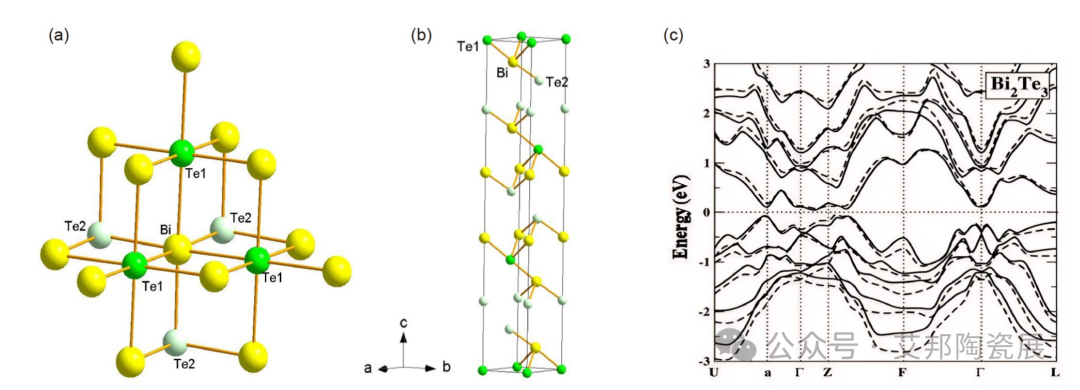
Molecular layer arrangement, crystal structure, and band structure of bismuth telluride
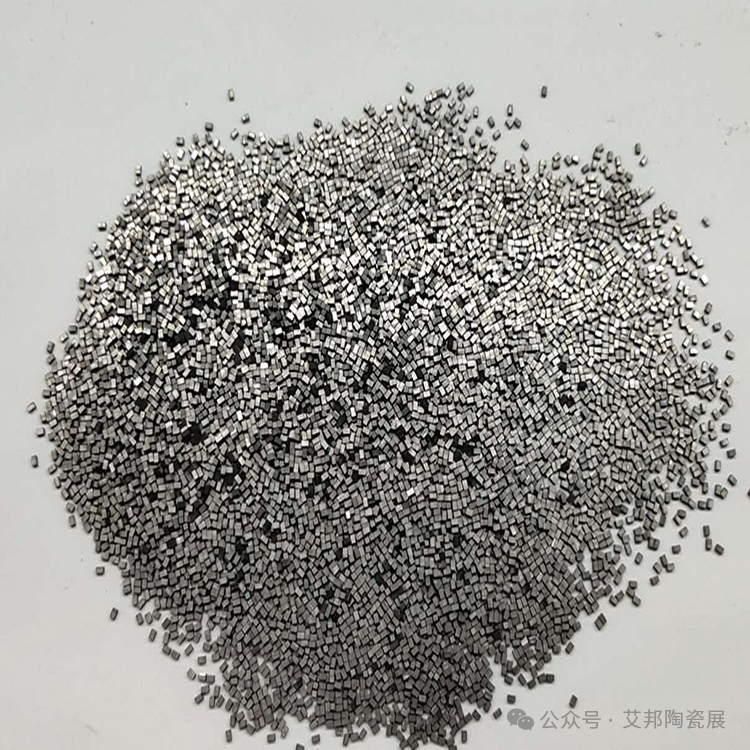
Bismuth Telluride Grains
Bismuth telluride materials exhibit outstanding room-temperature performance, meeting the requirements of the vast majority of applications operating at ambient temperatures. Furthermore, the manufacturing processes are mature, enabling mass production through techniques such as powder metallurgy, melt-cooling, and spark plasma sintering. However, challenges include high costs and resource scarcity; due to the low abundance of tellurium, the industrial price of the element has risen to between 1.6 million and 2 million RMB per ton. China and Canada are the primary sources of bismuth telluride, with China ranking at the forefront globally in terms of both bismuth reserves and production (accounting for over 85% of the global total).
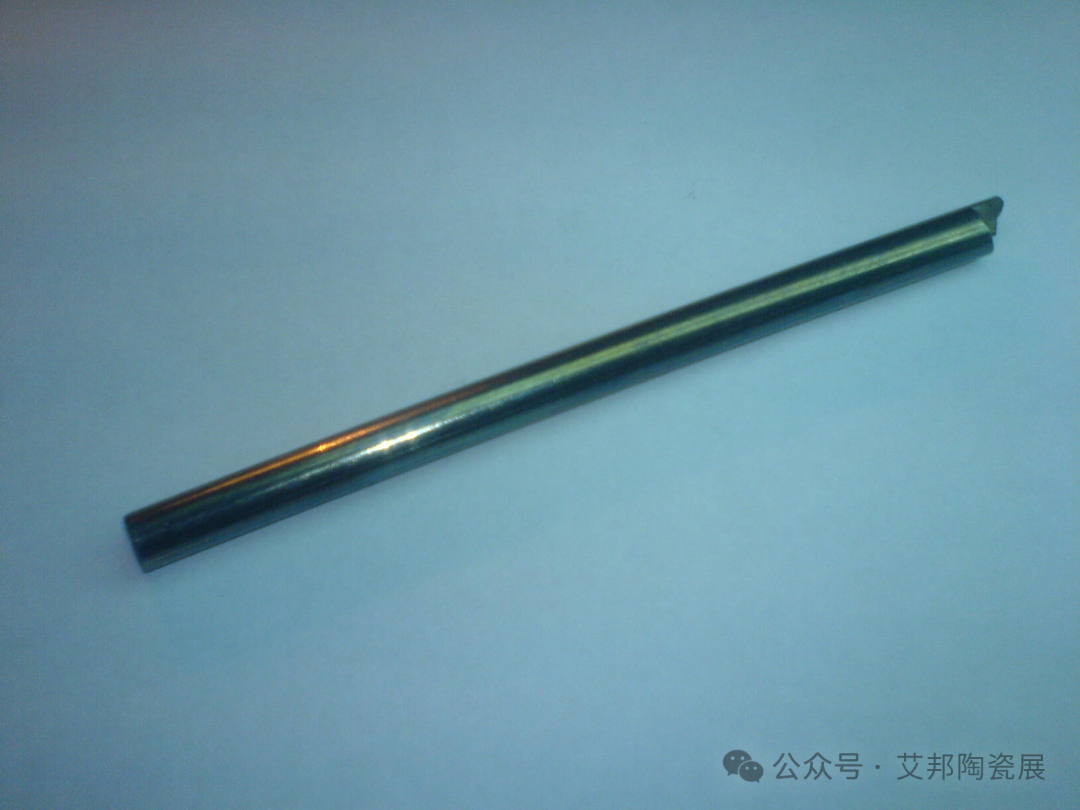
Bismuth Telluride Crystal Ingots
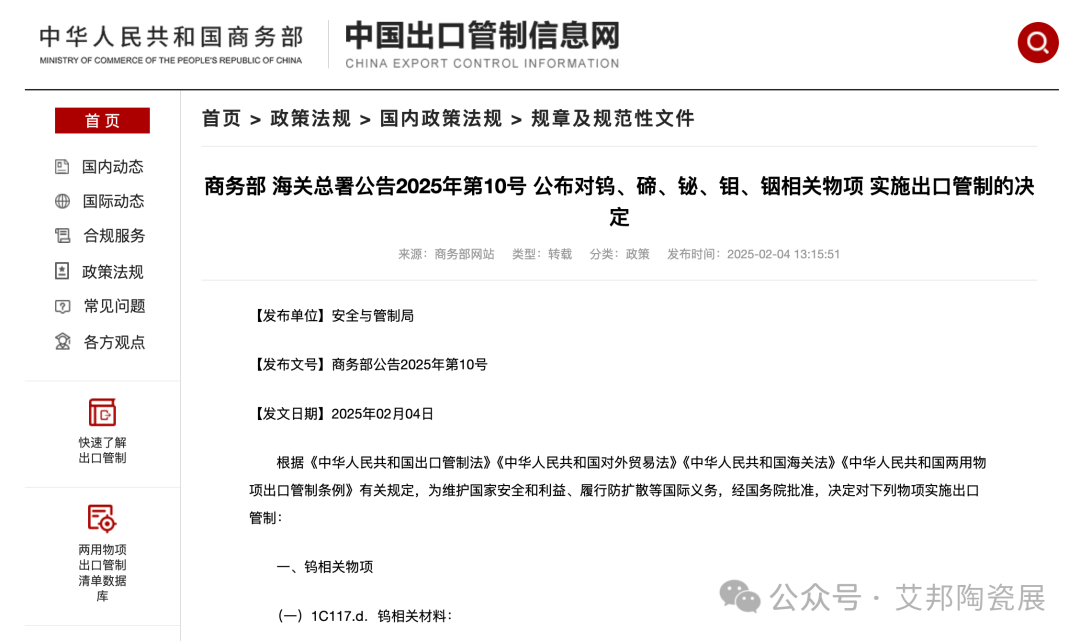
In February 2025, China implemented export controls on telluride materials, restricting the export of high-purity Bi₂Te₃ grains and ingots used in thermoelectric coolers (TECs); controls on 7N high-purity tellurides were further tightened in January 2026. Leading global TEC manufacturers—Japan’s Ferrotec and Komatsu KELK—sourced more than half of their high-end bismuth telluride raw materials from China. Between January and May 2026, China’s exports of high-purity tellurium and bismuth to Japan fell by 92% year-on-year, with supplies of 6N/7N high-purity Bi₂Te₃ to Japan virtually ceasing. While this development will to some extent impact Japan's production of high-end TECs, it presents a prime opportunity for domestic TEC enterprises to advance import substitution.
04 TEC Manufacturing Process
The production of Thermoelectric Coolers (TECs) involves five core stages: ultra-high-purity raw material purification, crystal preparation, precision machining, chip packaging, and testing/screening. The entire process demands extremely high precision. High-end TECs—particularly those for optical communications and industrial applications—require control over bismuth telluride material purity, grain consistency, and packaging precision at the parts-per-billion (ppb) level; this stringent requirement is a primary reason for the high barriers to entry in this field. The following outlines the standardized industrial mass production process:
Ultra-High-Purity Raw Material Purification
Bismuth telluride is synthesized from two rare, dispersed metals: bismuth (Bi) and tellurium (Te). The purity of these raw materials directly determines the final cooling efficiency and stability. While standard consumer-grade TECs require 5N (99.999%) purity materials, high-end communication-grade and precision instrument-grade Micro-TECs necessitate ultra-high-purity materials at the 6N to 7N (99.9999% to 99.99999%) level, with impurity content controlled within the ppb range.
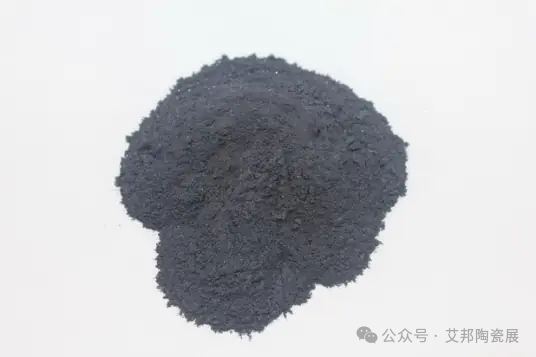
Instead of using ordinary metal powders as raw materials, the process involves repeatedly purifying crude bismuth and tellurium—byproducts of smelting—through multi-stage vacuum rectification and high-temperature, deep-level impurity removal to completely eliminate harmful impurities such as iron, copper, and lead. Following purification, the materials are weighed and precisely proportioned according to the Bi₂Te₃ stoichiometric ratio within an argon-protected, dust-free glove box; this ensures an exact elemental ratio, laying the foundation for subsequent crystal growth.
Preparation of Bismuth Telluride Crystals
The precisely proportioned, high-purity raw materials undergo a high-temperature synthesis process to produce dense, high-performance bismuth telluride crystal ingots. Currently, there are three mainstream mass-production processes in the industry, each suited to different application requirements:
1. Zone Melting Crystal Growth: A high-end process that utilizes vertical zone melting technology to slowly grow single-crystal bismuth telluride. The resulting crystals feature orderly orientation, minimal internal defects, and stable thermoelectric figures of merit. This method is primarily used for high-precision TEC devices in sectors such as high-speed optical modules and aerospace/defense; it is the primary high-end route for 7N single-crystal bismuth telluride and is employed by major commercial TEC manufacturers (e.g., Ferrotec, KELK, and Leadmicro).
2. Powder Metallurgy + SPS (Spark Plasma Sintering): This process combines mechanical alloying with spark plasma sintering technology to produce nanocrystalline bulk materials with a density exceeding 99%. It allows for controllable grain composition and high texturing, resulting in simultaneous improvements to both thermoelectric and mechanical properties; this is the mainstream production route for 6N polycrystalline bismuth telluride.
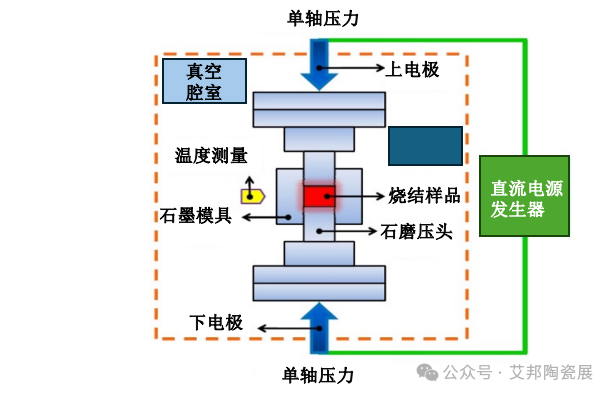
Schematic diagram of the Spark Plasma Sintering (SPS) equipment structure
3. Hot extrusion process: Zone-melted crystal rods undergo thermoplastic densification under pressure. This process refines the grain size while promoting grain reorientation to enhance the degree of texturing; the resulting material exhibits increased mechanical strength, while its thermoelectric performance remains comparable to that of zone-melted crystals.
Precision cutting and dicing to produce N-type and P-type crystal elements
Bulk bismuth telluride crystal ingots cannot be used directly; they require micron-level precision processing to be fabricated into the thermoelectric elements that form the core of the TEC (Thermoelectric Cooler). This is a critical step that determines the precision of the cooling module. First, a high-precision diamond saw cuts the ingot into crystal strips of uniform specifications; subsequently, automated dicing equipment cuts these strips into millimeter-scale cubic elements of consistent dimensions.
Doping-based modification is carried out simultaneously; through a precise doping process, the elements are categorized into two core types: P-type bismuth telluride elements (hole-conducting) and N-type bismuth telluride elements (electron-conducting). These two types of elements possess complementary properties and are paired for use.
05 TEC Device Assembly/Packaging
Individual N-type and P-type semiconductor elements are assembled into a complete thermoelectric cooling module using automated equipment. The entire process takes place in a clean, temperature-controlled workshop to eliminate the risk of product quality degradation caused by dust or temperature fluctuations.
The process begins by printing high-precision copper conductive circuits onto an insulating ceramic substrate. Automated equipment then arranges the N-type and P-type elements in an alternating pattern and precisely solders them to the circuits, connecting hundreds of pairs in series to form a complete thermocouple array. Next, the top ceramic substrate is attached, and the assembly undergoes high-temperature co-firing and vacuum sealing processes. This securely bonds the elements and circuit structure, ensuring device hermeticity and structural stability. Finally, conductive leads are attached to complete the formation of the basic TEC module.
The entire assembly process requires micron-level precision to prevent defects such as element misalignment, cold joints, or missed solder points, thereby avoiding issues like uneven cooling or localized overheating.
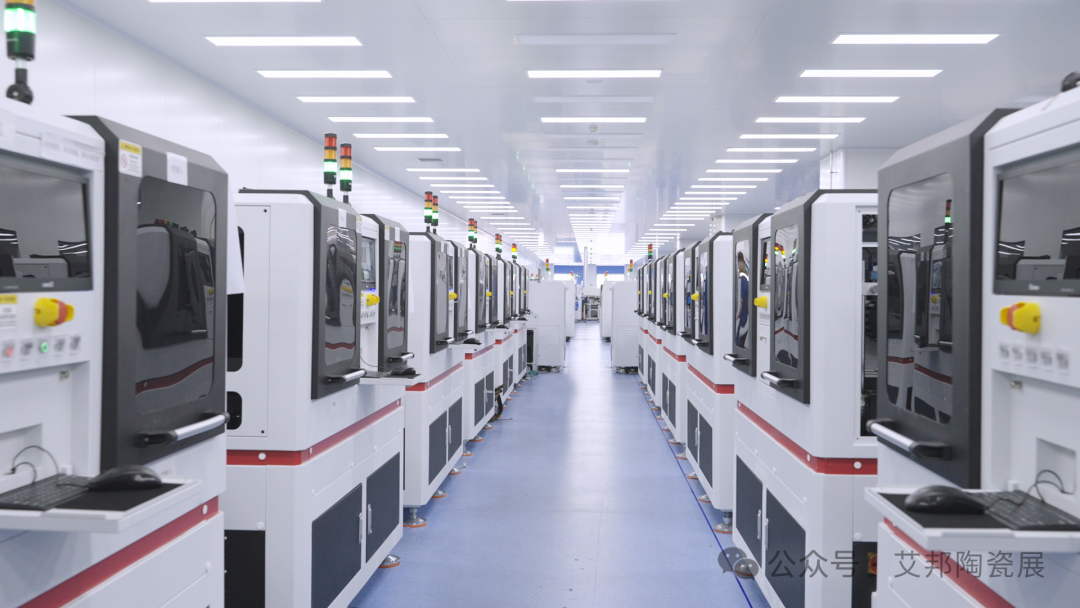
Customized automation equipment for thermoelectric devices (automatic sorting machines and flexible placement machines)
High-performance semiconductor thermoelectric devices involve significant technical barriers. To foster collaboration and communication across the industry supply chain, Aibang has established a dedicated discussion group for semiconductor thermoelectric coolers; simply long-press the QR code and add the administrator on WeChat to join.

Recommended Event: 2026 Semiconductor Thermal Management Materials Industry Forum (August 26, Hall 7, Shenzhen World Exhibition & Convention Center)
Conference Topics:
No. | Presentation Topic | Invited Companies (Tentative) |
1 | Research on surface modification of diamond powder and the application of diamond-copper composites in semiconductor device thermal management | Professor Wei Qiuping, School of Materials Science and Engineering, Central South University |
2 | Topic TBD | Ningbo Jingzuan Technology Co., Ltd. |
3 | Topic TBD | Xiancai (Shenzhen) Semiconductor Technology Co., Ltd. |
4 | Application of Micro-TEC (Micro-Thermoelectric Coolers) in optical modules | Liaoning Lengxin Semiconductor Technology Co., Ltd. |
5 | Topic TBD | Kesai'da (Shanghai) Semiconductor Technology Co., Ltd. |
6 | Optimization strategies for interfacial thermal resistance in diamond/copper composites | Diamond thermal management material companies |
7 | Application prospects of liquid cooling combined with diamond-based thermal management solutions in intelligent computing centers | Diamond substrate companies / Data center cooling companies |
8 | MPCVD technology optimization: Uniformity control and defect suppression | Diamond substrate/material/equipment companies |
9 | Advantages of aluminum nitride ceramic substrates for TEC (Thermoelectric Cooler) heat dissipation | Ceramic TEC companies |
10 | Thermoelectric coolers (TECs) enabling thermal management in new energy vehicles | Ceramic TEC companies |
We are currently accepting proposals for additional topics. For inquiries regarding innovative speaking opportunities and sponsorship, please contact Ms. Li at 18823755657 (also her WeChat ID).
Booth Inquiries:
Ms. Long: 18318676293 (WeChat ID same as mobile number)
Ms. Li: 18823755657 (WeChat ID same as mobile number)
Ms. Wen: 18126443075 (WeChat ID same as mobile number)
Email: lirongrong@aibang.com
Scan the QR code to add us on WeChat and inquire about exhibition details.

Long-press the QR code to register online:

Alternatively, copy the URL to your browser to register via WeChat:
https://www.aibang360.com/m/100312